Quick Summary
Designed for SMB decision makers, this blog explains how retail chain management software enables centralized control, real-time visibility, and scalable operations across multiple stores. It breaks down when growing retail chains outgrow POS-only systems, what capabilities matter most, and how leadership teams can evaluate and implement the right solution with minimal risk.
Retail chains scaling beyond a handful of locations often hit a hidden brick wall – visibility and control breakdowns that silently erode profitability. Research shows that, on average, retailers only have an accurate indication of inventory across their entire operations about 70% of the time, meaning nearly one in three stock decisions are made on incomplete data.
As retail operations grow beyond two or three stores, basic POS systems, spreadsheets, and store-level accounting that once sufficed quickly become barriers to real growth. For retail chains managing 5 to 50 locations, this complexity shows up as inventory imbalance, inconsistent execution, delayed financial visibility, and leadership decisions made on incomplete or outdated data.
That’s the point where retail chain management software evolves from a desirable tool to a strategic necessity – offering the centralized visibility, operational control, and financial clarity required to scale with confidence.
Why Growing Retail Chains Outgrow Store-Level and POS-Only Systems
Most retail chains don’t struggle because demand drops or products fail. They struggle because store-level Retail Software tools don’t scale into chain-level control. What works for a few locations quietly breaks as the business grows.
The Retail Growth Trap
In the early stages, independence feels efficient. POS systems handle transactions, accounting software manages books, and spreadsheets fill operational gaps. At two or three stores, this setup seems flexible and cost-effective.
As the chain expands, however:
- Each store becomes a data silo
- Head office loses real-time visibility
- Reporting turns manual and delayed
- Leadership spends time fixing issues instead of driving growth
What supported growth at three stores becomes a liability at ten.
Where POS-Only Systems Break Down
POS tools capture sales, not operational control. As store count rises, retailers commonly face:
- Inventory shortages in some stores and excess stock in others
- Inconsistent pricing and promotions across locations
- Delayed financial close and unreliable reports
- No clear view of store-level profitability
At this stage, adding another POS or expanding spreadsheets only increases complexity. This is when retailers begin evaluating retail chain management software and retail chain management systems to regain centralized visibility, financial control, and scalable operations.
Signs Your Retail Chain Is Ready for Centralized Management Software
Before shortlisting vendors, most retail leaders pause and ask a critical question: Are we moving too early, or already too late?
For retail chains, readiness is not defined by store count. It’s defined by loss of centralized control. When operational signals appear, the business has already outgrown store-level systems.
Operational Signals That Indicate a Need for Retail Chain Management Software
Your retail chain is ready for centralized retail management software when:
- Inter-store stock transfers are frequent, urgent, and unplanned
- Pricing and promotions are configured manually store by store
- Store execution varies despite documented SOPs
- Head office depends on constant follow-ups, checks, and overrides
These are not efficiency gaps. They are governance failures caused by disconnected systems.
At this point, retailers are no longer managing growth, they are managing exceptions.
Financial and Leadership Signals Decision Makers Can’t Ignore
From an executive and financial standpoint, the signals are even clearer:
- Store-level P&L is delayed, unreliable, or unavailable
- Expansion decisions rely on instinct instead of data
- Margin leakage is visible but impossible to trace by location
- Leadership reviews reports after issues surface, not before
When this happens, retail chain management systems move from a “future consideration” to an operational requirement.
For SMB decision makers, centralized retail chain management software is no longer about optimization. It becomes the foundation for financial visibility, executive control, and scalable growth.
What Is Retail Chain Management Software (And What It Is Not)
Choosing the wrong software category is one of the most expensive mistakes growing retail chains make. Many retailers don’t fail because they chose a bad tool, they fail because they chose the wrong type of system for their stage of growth.
Understanding what retail chain management software truly represents helps avoid that misalignment.
Retail Chain Management Software Explained for Retail Chains
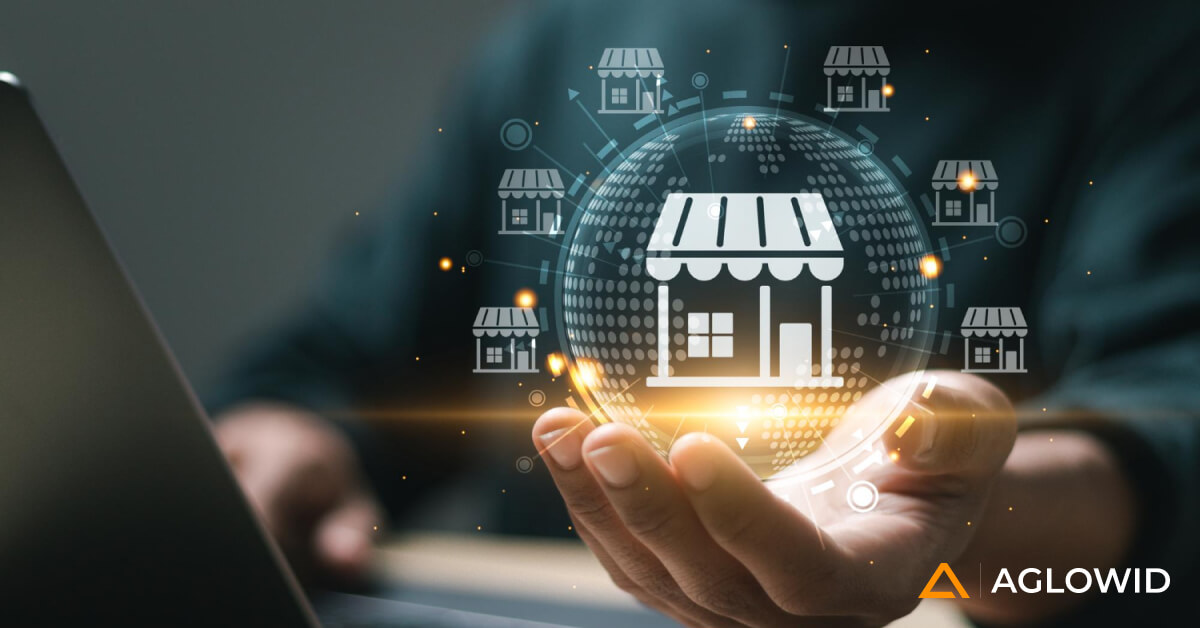
Retail chain management software is a centralized retail management system built to run chain operations from a single control layer.
For SMBs, it serves as the operating backbone that connects:
- Multi-Location inventory and stock movement
- Chain-wide pricing, promotions, and product catalogs
- Consolidated financials and store-level P&L
- Store performance tracking and KPI visibility
- Governance between head office and individual locations
Unlike store-level tools, retail chain management software enables centralized decision-making while still allowing store teams to execute locally. The result is consistency without micromanagement, and control without slowing down the business.
This is the difference between managing stores and managing a retail chain.
What Retail Chain Management Software Is Not
Clarity here prevents costly overinvestment and underperformance.
Retail chain management software is not:
- Just a multi-location POS system focused on transactions
- Accounting software with retail add-ons and spreadsheets
- An enterprise retail platform designed for big-box or global retailers
For retail chains in the USA, the objective is not maximum complexity. It’s scalable control, financial visibility, and operational governance that grows with the business.
When evaluated correctly, retail chain management systems sit between POS-only tools and heavyweight enterprise platforms, delivering exactly what growing chains need, and nothing they don’t.
Core Capabilities Retail Chains Must Prioritize
Not all retail management software is designed to handle the complexity of chain operations. For SMBs, choosing the right system is less about features and more about scalable operational control, financial visibility, and governance. The capabilities below separate platforms built for growth from tactical or POS-centric tools.
Centralized Inventory Management Across Stores
Inventory is where most retail chains feel the first pinch. Without real-time chain inventory management, stock imbalances and lost sales become inevitable.
A robust retail chain management system provides:
- Real-time inventory visibility across stores and warehouses
- Seamless inter-store stock transfers without manual reconciliation
- Automated replenishment and reorder rules
- Inventory aging, shrinkage, and variance tracking
This shifts inventory management from constant firefighting to strategic planning, ensuring stores are always stocked for demand.
Chain-Wide Sales, Pricing, and Promotion Governance
Consistency across stores is critical to brand trust, but rigidity can stifle local responsiveness. The right system supports:
- Unified product catalogs and pricing across the chain
- Controlled store-level pricing flexibility
- Promotion governance with regional or store-specific exceptions
This ensures brand consistency, drives revenue, and respects local market dynamics.
Financial Control and Store-Level Profitability Visibility
Financial clarity is where real leadership value emerges. Retail chain software enables:
- Consolidated financial reporting across locations
- Store-wise P&L and margin tracking
- Chain-wide chart of accounts
- Tax compliance and regulatory reporting
Why Store-Level Profitability Changes Executive Decisions
With accurate profitability data:
- Underperforming stores can be addressed proactively
- Promotions are evaluated based on margin impact, not just sales
- Expansion becomes a calculated, data-driven decision
This is why CFOs and financial leaders often champion ERP-backed retail chain management systems in chains.
POS and Omnichannel Execution at Chain Scale
POS remains critical, but only as part of a larger retail chain ecosystem. The platform should enable:
- Synchronization across all store POS systems
- Unified online and offline sales channels
- Buy-online-pickup-in-store (BOPIS) workflows
- Centralized customer, loyalty, and engagement data
The result is a consistent customer experience across every touchpoint.
Organizational Control and Governance Model
As chains grow, accountability becomes essential. A strong retail chain management system supports:
- Role-based access and permissions for head office and store managers
- SOP enforcement across locations
- Approval workflows and detailed audit trails
This allows centralized control without slowing down operations, enabling executives to scale confidently.
Check our Success Story
Multi-Store Retailer Boosted Sales by 28%
with Odoo Omnichannel Retail Platform
Industry: Retail
Location: USA – Multi Region
How Retail Chain Management Software Enables Scalable Growth
For growing retail chains, technology alone doesn’t drive growth – structure and centralized control do. The right retail chain management software transforms scattered operations into a repeatable, scalable system that empowers leadership, improves profitability, and reduces risk.
Standardization Without Losing Local Flexibility
Centralized systems allow retail chains to enforce consistency while respecting store-level autonomy:
- Standardized processes across all stores
- Controlled local deviations when market conditions demand it
- Faster onboarding and training of new locations
With these capabilities, growth becomes predictable and manageable, rather than chaotic and reactive.
Faster, Data-Driven Leadership Decisions
When dashboards display real-time KPIs across the chain, leadership can shift from firefighting to proactive management:
- Spot operational issues before they escalate
- Make decisions based on accurate, up-to-date data
- Eliminate hours spent compiling reports manually
This is where retail chain management software directly enhances executive effectiveness and strategic planning.
Reduced Operational and Financial Risk
As the number of stores increases, so do operational and financial risks. Centralized retail management software mitigates these risks by:
- Reducing dependency on spreadsheets and disconnected tools
- Minimizing errors from manual reconciliation
- Closing compliance and regulatory gaps
- Simplifying audits with chain-wide visibility
For SMBs, the risk reduction alone often justifies the investment, making it easier to scale operations with confidence.
Retail Chain Management Software vs Common Alternatives
For retail decision makers, selecting the right system isn’t just about choosing a vendor – it’s about choosing an approach to scaling operations, governance, and profitability. Understanding how retail chain management software compares to other common tools helps avoid costly misalignment and missed opportunities.
POS-Centric Tools: Good for Transactions, Not Control
POS-first tools are designed primarily for sales tracking and basic reporting, making them suitable for small chain setups.
They work well for:
- Recording transactions efficiently
- Generating store-level sales reports
But they fall short when the chain grows:
- Financial consolidation across stores is difficult
- Complex inventory planning becomes error-prone
- Varied region governance and compliance are nearly impossible
For SMBs, relying solely on POS tools is a short-term fix that limits strategic growth.
Accounting Software Plus Spreadsheets: Economical, But Risky
Many growing retailers try to manage chain operations with accounting software and spreadsheets. While initially cost-effective, this approach introduces hidden risks and operational inefficiencies.
Challenges include:
- Hidden labor costs from manual consolidation
- High risk of errors in inventory, pricing, and financial reporting
- Limited scalability as store count increases
Most chains outgrow this model faster than expected, often realizing that the cost of inefficiency exceeds the software license savings.
Enterprise Retail Platforms: Depth Without Fit
Enterprise retail platforms promise end-to-end functionality, but they are often over-engineered for retailers.
Drawbacks include:
- High licensing and implementation costs
- Long, resource-intensive deployment timelines
- Complexity that exceeds the operational needs of SMB retail chains
For retailers, these platforms solve problems that don’t yet exist, while introducing unnecessary operational and financial strain.
Why Retail Chain Management Software Stands Out
Unlike these alternatives, retail chain management software is designed for chain operational control, centralized inventory management, and store-level profitability visibility – without the cost and complexity of enterprise systems. It enables SMBs to standardize processes, gain actionable insights, and scale confidently, making it the strategic choice for growing retail chains.
Retail Chain ERP vs Standalone Retail Systems
As retail chains grow, ERP-level capabilities become essential for maintaining control, financial accuracy, and operational efficiency. Understanding when to adopt an ERP-backed retail chain management system versus standalone tools is critical for SMB decision makers.
When Retail Chains Need ERP-Level Capabilities
Not every growing chain requires ERP from day one. However, ERP-backed systems are strategically valuable when:
- Finance needs centralization across multiple entities or locations
- Inventory flows span warehouses, stores, and distribution centers
- Expansion crosses regions, states, or tax jurisdictions
At this stage, standalone retail systems or POS-centric tools are insufficient to handle complex chain operations and compliance needs.
ERP-Backed vs Best-of-Breed: A Decision Framework
SMB leaders evaluating solutions should consider:
- Long-term total cost of ownership – not just upfront licensing fees
- Integration complexity versus unified data – how well systems talk to each other
- Scalability beyond 20-50 stores – can the system support future growth without overhauls
ERP-backed systems often provide a single source of truth, reducing operational fragmentation and enabling data-driven decisions at the chain level.
Ideal Retail Chains for This Type of Software
Choosing the right system also depends on the profile and growth stage of the chain.
Best-Fit Retail Profiles
Retail chain management software delivers the highest ROI for:
- Chains operating 5 to 50 locations
- Franchise or hybrid ownership models
- Retailers planning regional or national expansion
These chains benefit most from centralized inventory management, store-level profitability insights, and multi-location governance.
When It May Be Overkill
ERP-backed or retail chain management systems may be premature for:
- Single-store retailers
- Early-stage chains without centralized finance or operations
For SMBs, timing matters as much as features. Implementing too early can increase complexity without delivering proportional ROI, while implementing too late risks inefficiency, lost revenue, and decision-making bottlenecks.
Implementation Best Practices for Retail Chains
Selecting the right retail chain management software is only half the battle. Successful outcomes hinge on execution, adoption, and governance. For SMBs, a structured approach ensures maximum ROI and smooth scalability.
Phased Implementation Strategy: Reduce Risk, Accelerate Adoption
Rolling out a chain system in phases prevents disruption and builds confidence:
- Phase 1: Core finance, accounting, and inventory management
- Phase 2: POS integration and store operations
- Phase 3: Automation, analytics, and performance optimization
Phased implementation allows leadership to validate processes, minimize errors, and drive adoption gradually, making scaling repeatable and predictable.
Common Failure Points in Retail Chain Software Rollouts
SMBs often stumble on execution rather than software choice. Common pitfalls include:
- Over-customization that slows deployment
- Poor data migration causing reporting errors
- Weak store-level adoption due to insufficient training
- Lack of executive sponsorship and accountability
Avoiding these risks is often more critical than selecting the perfect feature set.
Change Management and Store-Level Adoption
Technology adoption is as much about people as it is about systems. Success improves when:
- Training is role-based and relevant to store and head office teams
- Standard operating procedures (SOPs) are clearly communicated
- KPIs and performance tracking reinforce system usage
Effective change management is a leadership responsibility, not an IT task, ensuring the system drives operational excellence across all stores.
Key Takeaways for Retail Chain Decision Makers
Strategic Summary
For SMBs, retail chain management software is more than a technology upgrade. It is a tool for centralized control, financial clarity, and scalable growth.
Benefits include:
- Centralized systems that unlock profitability and reduce operational risk
- Financial visibility that empowers confident, data-driven decisions
- Governance and compliance that enable sustainable chain expansion
Practical Next Steps
To maximize ROI and minimize risk:
- Audit current systems and identify operational gaps
- Define which functions require head office control vs store-level execution
- Shortlist ERP-backed or centralized retail management platforms
- Pilot critical modules before full-scale deployment
Retail chains that scale successfully do not grow faster-they grow smarter.
With the right retail chain management software, SMBs can achieve repeatable growth, operational control, and sustained profitability.