Quick Summary
Mobile ERP improves real-time visibility in field service operations by connecting field technicians, dispatchers, and back-office teams on a single live platform. When a technician completes a job, updates materials, or logs a safety check on their mobile device, that data instantly reflects across scheduling, inventory, billing, and operations dashboards simultaneously. This eliminates the communication gaps, paper-based delays, and manual call-backs that traditionally prevent operations managers from seeing what is actually happening across their field workforce in real time.
The business impact is direct and measurable. Billing cycles that previously ran five to ten days compress to same-day. Dispatchers make scheduling decisions based on live technician locations and job statuses rather than guesswork. Operations directors and founders get live cost, utilization, and revenue dashboards instead of end-of-week summaries. For field service businesses in construction, HVAC, facility management, industrial services, and utilities, Mobile ERP is the operational infrastructure that replaces reactive firefighting with proactive, data-driven management.
Somewhere right now, a service manager at a mid-sized HVAC or facilities company is refreshing a spreadsheet, trying to figure out which of their fourteen technicians completed jobs this morning. A dispatcher is on the phone, calling a technician for the third time in two hours to get a job status update. An operations director is reviewing invoices that are five days late because the paper work orders from last Tuesday still have not made it back to the office.
This is not a people problem. It is a visibility problem, and it is costing field service businesses millions of dollars every year in delayed billing, poor scheduling, reactive decision-making, and customer churn.
The question is no longer whether field service operations need real-time operational visibility. The question is how quickly leadership teams are willing to replace the fragmented tools and manual workflows that are actively limiting growth.
Mobile ERP, built specifically for field service environments, is the answer most operations leaders have been looking for, and in 2026, the market is proving it. According to Fortune Business Insights, the global field service management market was valued at USD 5.37 billion in 2025 and is projected to reach USD 13.79 billion by 2034, growing at a 10.70% CAGR. The single biggest driver of that growth? The demand for real-time visibility and mobile-first operational connectivity.
This guide is written for the operations heads, service directors, founders, and mid-market SMB leaders who are done with the guesswork and ready to understand what a Mobile ERP connected with field service ecosystem actually changes on the ground.
The Operational Reality Most Field Service Companies Are Living In
Let us be direct about what disconnected field operations actually look like in practice, because the operational inefficiencies are rarely framed in full when companies evaluate technology.
The Dispatcher Running Blind
In most mid-market field service businesses, dispatchers are operating on incomplete information. They know which jobs are scheduled. They rarely know which jobs are actually in progress, completed, or blocked. The only way to find out is to call. That single workflow failure ripples through everything: scheduling efficiency, customer communication, SLA compliance, and technician utilization all degrade.
The Technician Carrying Paper
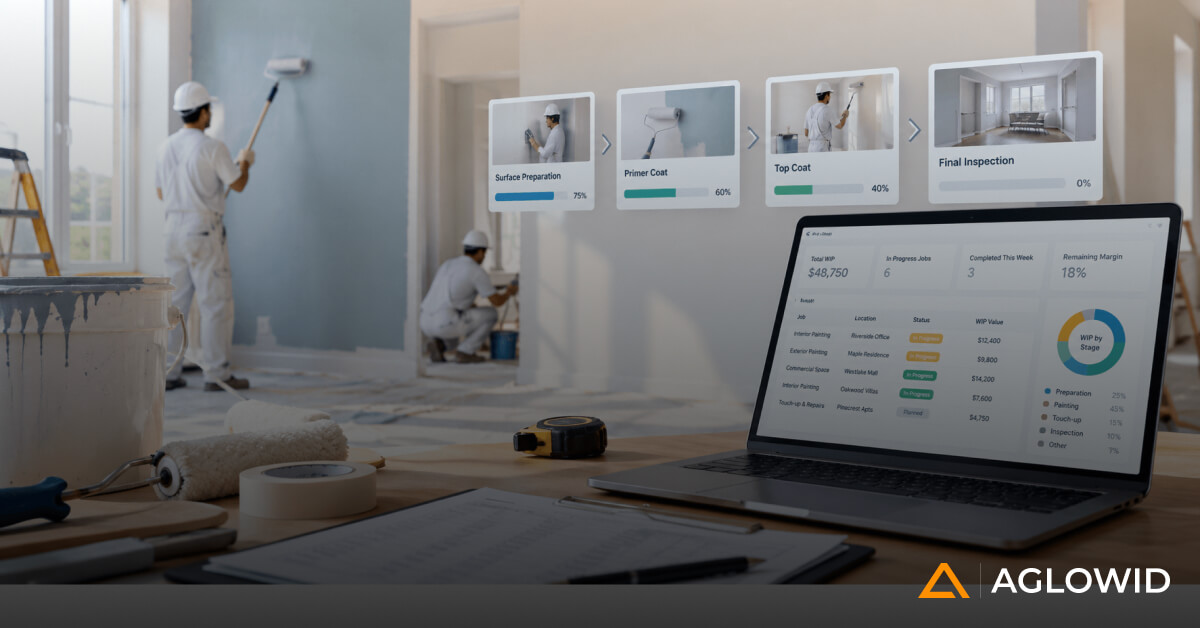
Field technicians in construction, painting, industrial services, and maintenance often arrive at job sites with paper work orders or printed checklists. When something changes on site, there is no mechanism to update the back office in real time. Material shortages, scope changes, access issues, and additional work discovered on site all get recorded in field notes that no one in the office sees until hours or days later.
The Finance Team Waiting for the Field
Billing cycles in field service businesses are disproportionately long. The reason is almost always the same: invoicing cannot begin until field data is received, validated, and entered. When that process depends on paper forms or manual call-backs, billing delays of five to ten business days become the norm. For businesses running dozens or hundreds of jobs per week, those delays translate directly into cash flow problems.
The Leadership Team Making Stale Decisions
Operations directors and founders at field service companies frequently make scheduling, resource allocation, and pricing decisions based on reports compiled from yesterday’s data. Real-time operational intelligence does not exist. At the leadership level, this means strategic decisions about capacity, hiring, territory expansion, and service line profitability are being made with a rearview mirror.
A Mobile ERP Connected to Field Service Operations lowers 40% of Admin Time – Industry analysis on FSM modernization
The Visibility Gap: What It Costs and Why It Persists
The visibility gap in field service operations is the space between what is happening in the field and what leadership and back-office teams can see, act on, and measure in real time. For most SMB field service operations, that shift starts with a structured digital transformation roadmap that aligns processes, data, and technology instead of just adding another app on top of broken workflows. It persists for three interconnected reasons.
- Legacy systems were not designed for mobile workforces. Most ERP platforms implemented five to ten years ago were built around office-based operations. They were never designed to capture, process, or surface data from workers in the field without significant manual intervention.
- Technology adoption in field service industries has historically lagged other sectors. Construction, painting and coating, HVAC, maintenance, and utilities companies tend to defer technology investment until operational pain becomes unavoidable, often by which point competitors who moved earlier have already captured efficiency advantages.
- Integration complexity discourages investment. When ERP, scheduling, billing, inventory, and mobile tools operate as separate systems, the cost and complexity of connecting them feels prohibitive. Many businesses accept data silos as an operational reality rather than a solvable problem.
“Real-time visibility is not a feature. It is the operational foundation that every other efficiency gain in field service is built on.”
According to McKinsey research, smart scheduling and real-time data access can increase field workforce productivity by up to 29% across the board. That is not a marginal improvement; it is an operational transformation that compounds over time as scheduling efficiency feeds into billing speed, which feeds into cash flow, which feeds into capacity investment.
Yet many mid-market businesses are still operating on scheduling whiteboards, group text messages, and manually updated spreadsheets instead of shifting to any Construction Software solution.
Real-World Field Service Bottlenecks That Mobile ERP Directly Addresses
To understand where Mobile ERP creates the most immediate value, it helps to map the specific operational bottlenecks that cost field service businesses the most time and money.
| Operational Bottleneck | Root Cause | Business Impact |
| Delayed job status updates | No real-time field-to-office data link | Poor scheduling decisions, customer dissatisfaction |
| Paper-based work orders | No mobile data capture in the field | Billing delays, data entry errors, lost documentation |
| Manual job scheduling | No live technician location or capacity data | Overbooking, technician idle time, missed SLAs |
| Reactive material ordering | No real-time inventory visibility from field | Job delays, cost overruns, technician wait time |
| Delayed invoicing | Field completion data not auto-synced to billing | Cash flow problems, revenue leakage |
| No live cost tracking | Job costs not captured in real time | Budget overruns identified too late to correct |
| Incomplete compliance records | Manual safety and sign-off documentation | Audit risk, liability exposure, rework costs |
| Poor first-time fix rates | Technicians lack access to asset history or specs | Repeat visits, warranty costs, customer churn |
Each of these bottlenecks is a symptom of the same underlying condition: field operations that are not connected to back-office systems in real time. Mobile ERP is the connective layer that resolves all of them at once.
How Mobile ERP Changes Operational Workflows From the Ground Up
A Mobile ERP platform built for field service is not simply a desktop ERP with a mobile interface bolted on. It is an integrated ecosystem designed to capture, process, and surface operational data at the point of work, in real time, and sync that data across every function in the business from scheduling and dispatch through inventory, billing, compliance, and executive reporting.
The workflow transformation is most visible across five critical operational areas.
1. Job Assignment and Dispatch
In a Mobile ERP environment, dispatchers see a live operational picture: technician locations, current job statuses, available capacity, and skills matrices. When a new job comes in or an existing job requires a change, dispatch decisions are made on real data rather than guesswork. Scheduling accuracy improves, travel time falls, and job completion rates increase.
Coca-Cola, for example, reduced dispatch time by 30% after implementing an intelligent field service platform, according to reporting from ServiceNow deployment case data. British Gas improved appointment adherence by 20% through connected scheduling.
2. Field Data Capture and Work Order Management
Technicians on site use mobile devices to access job details, customer and asset history, safety checklists, and documentation requirements. Completions, photographs, signatures, material usage, and time logs are recorded at the point of work and synced to back-office systems instantly. Paper forms, manual call-backs, and delayed data entry are eliminated. In many cases, operations teams extend their core Mobile ERP with custom mobile field apps tailored to niche workflows, inspections, or compliance needs that out‑of‑the‑box tools cannot handle.
The operational impact is immediate. Field data that used to arrive in the office two to five days after job completion is now available within seconds of job sign-off.
3. Inventory and Materials Management
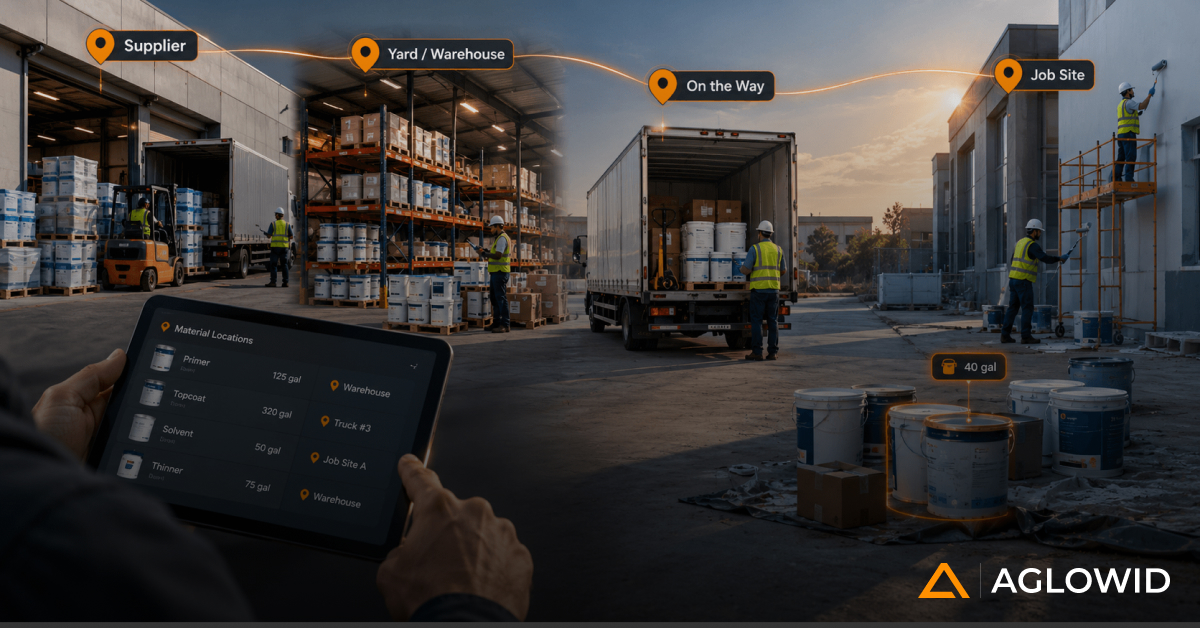
Field technicians update material usage in real time from the job site. Inventory levels adjust automatically. Reorder triggers fire before shortages become job delays. Stock levels at service vehicles and warehouses are visible to operations managers at all times. Emergency procurement decisions that used to be reactive become preventive.
4. Time, Cost, and Budget Tracking
Labor time, travel time, and material consumption are recorded at the field level and flow directly into job costing modules within the ERP. Operations managers can see actual versus budgeted costs on any active job, in real time. Margin visibility at the job level eliminates the post-project cost shock that plagues many field service businesses.
5. Invoicing and Collections
When job completion data, time records, and material usage are automatically synced from the field to the billing module, invoices can be generated the same day a job is completed. In businesses where billing cycles previously ran five to ten days, same-day or next-day invoicing dramatically accelerates cash conversion.
EXECUTIVE INSIGHT
Companies that modernize FSM with connected mobile platforms consistently report 40% lower administrative time, doubled technician productivity, and operating cost reductions of 10 to 20 percent. – IFS Industry Analysis, 2025.
The Role of Real-Time Synchronization in Field Service ERP
Real-time synchronization is the technical engine underneath operational visibility. It is the mechanism that ensures data created in the field does not sit in a mobile app waiting for someone to upload it manually, but instead flows immediately into every connected system the moment it is created.
In practical field service terms, this means:
- A technician closing a work order on a mobile device simultaneously updates job status in the dispatch board, triggers the invoice in the billing module, adjusts inventory levels, and logs the labor entry in the payroll module.
- A scope change discovered on site is captured in the mobile app, flagged for customer approval, updated in the project cost tracker, and visible to the operations manager within seconds.
- A safety inspection completed in the field is timestamped, photo-documented, and stored in the compliance record immediately, with no risk of lost paperwork or missing sign-offs.
- A job delay caused by material unavailability is flagged in real time, allowing the dispatcher to reroute the technician to another job rather than leaving them idle at a blocked site.
Modern Mobile ERP platforms are also designed for low-connectivity environments. Offline-first architectures allow field technicians to work without an active internet connection and sync all captured data automatically when connectivity is restored. This is particularly important in construction sites, industrial facilities, basement environments, and rural service territories where signal reliability cannot be guaranteed.
According to Global Market Insights, the FSM market is expected to grow from USD 6.21 billion in 2026 to USD 23.61 billion by 2035, with offline-capable mobile architectures and real-time sync capabilities identified as primary differentiating factors among leading platforms.
Impact on Scheduling, Job Costing, Billing, and Strategic Decision-Making
The operational gains from Mobile ERP are not limited to field-level efficiency. They cascade through every business function that depends on field data, including scheduling optimization, financial management, and executive strategy.
Scheduling and Capacity Optimization
With live technician locations, current job statuses, and skills data available in the dispatch interface, scheduling becomes a precision operation rather than a coordination exercise. Dynamic scheduling algorithms can automatically reassign jobs based on real-time changes, route technicians optimally, and maintain balanced workloads across the team. Deloitte notes that optimizing dispatch processes through skill-based, proximity-aware scheduling directly reduces service costs while improving first-time fix performance.
Job Costing and Margin Management
Real-time cost tracking at the job level gives operations managers the visibility to manage margins actively rather than assess them retrospectively. When actual material costs, labor hours, and travel time are captured in the field and reflected in job costing dashboards in real time, managers can course-correct on over-running jobs while they are still open. This capability transforms job costing from a post-project accounting exercise into a live operational control mechanism.
Billing Velocity and Cash Flow
Perhaps the most immediately felt financial impact of Mobile ERP in field service businesses is billing speed. When field completion data flows automatically into the invoicing module, billing cycles that previously ran five to ten days can compress to same-day or next-day. For a business running 200 service jobs per week at an average invoice value of USD 1,200, accelerating billing by just five days translates into over USD 1.2 million in additional working capital at any given time.
Data-Driven Leadership Decisions
When operations directors and founders can see live job status, technician utilization, revenue realization, and cost performance on a single dashboard, the quality and speed of strategic decisions improves materially. Territory expansion decisions, service line profitability analysis, technician headcount planning, and pricing strategy can all be grounded in current operational data rather than monthly report summaries. Many mid‑market teams get there by pairing Mobile ERP with focused data analytics and reporting initiatives that turn raw operational events into role‑based dashboards for leadership.
Mobile ERP Use Cases Across Field Service Industries
The operational benefits of Mobile ERP are not theoretical. Across the industries that field service businesses operate in, the use cases are practical, specific, and consistently high-impact.
| Industry | Key Mobile ERP Use Case | Primary Visibility Gain |
| Construction | Real-time progress updates, materials tracking, subcontractor management | Live job completion status, cost-to-complete visibility |
| HVAC / Mechanical | Work order management, equipment asset history, preventive maintenance scheduling | First-time fix rate improvement, service history access on-site |
| Painting / Coating | Crew deployment, material consumption tracking, daily production logging | Actual vs. estimated productivity, billing documentation |
| Facility Management | Planned maintenance scheduling, reactive work order dispatch, compliance documentation | SLA adherence, audit trail for regulatory compliance |
| Industrial Services | Safety inspection workflows, hazmat documentation, shutdown and turnaround management | Real-time safety compliance, scope-change cost capture |
| Utilities / Energy | Outage response dispatch, asset condition logging, crew tracking | Live crew deployment status, regulatory reporting |
| Telecom Infrastructure | Installation and repair work orders, equipment inventory, contractor coordination | Network build progress, contractor utilization visibility |
| Cleaning / Janitorial | Route-based job scheduling, quality inspection forms, client sign-offs | Service verification, contract compliance documentation |
Workflow Example: HVAC Service Company
Consider a mid-sized HVAC company managing 30 technicians across a regional territory. Before Mobile ERP adoption, dispatchers operated from a whiteboard and a shared spreadsheet. Technicians carried paper work orders. Invoices were produced from hand-written field notes collected at the end of each week.
After implementing a connected Mobile ERP platform:
- Morning dispatch is automated based on technician proximity, skills, and job priority.
- Technicians access full equipment service histories on their mobile devices before arriving on site.
- Parts used on each job are logged from the field, triggering automatic inventory replenishment orders.
- Job completion triggers same-day invoice generation, with photo documentation attached.
- The operations director sees real-time technician utilization, daily revenue realization, and open job cost variance on a live dashboard.
The result: billing cycle time drops from seven days to same-day. First-time fix rates improve because technicians arrive with full asset histories. Technician utilization increases because idle time from scheduling inefficiency is eliminated.
What Operations Managers and Leadership Teams Actually Gain
The benefits of Mobile ERP are not uniform across organizational levels. Operations managers, service managers, founders, and finance directors each experience a distinct and material change in how they work.
For Operations and Service Managers
- Real-time job board showing current status of every active field job
- Live technician location and capacity data to support dynamic scheduling
- Immediate alerts for jobs at risk of SLA breach, scope overrun, or safety issue
- Automated work order creation, assignment, and closure workflows
- Field productivity dashboards measuring jobs completed, travel efficiency, and utilization by technician or team
For Finance and Billing Teams
- Automated billing triggers linked to field job completion, eliminating manual invoice preparation
- Real-time job costing and margin visibility to identify unprofitable contracts before they close
- Reduced accounts receivable cycle time through faster invoice dispatch
- Elimination of billing errors from manual data transcription
For Founders and Directors
- Strategic dashboards with live revenue realization, cost-to-serve, and margin performance by service line or territory
- Accurate capacity utilization data to support headcount and territory expansion decisions
- Compliance documentation and audit trails that reduce regulatory exposure
- Customer satisfaction data linked to field performance metrics
OPERATIONAL REALITY CHECK
According to Salesforce data, 57% of field technicians report burnout from rising workloads and tighter SLAs. When Mobile ERP reduces administrative burden and improves scheduling accuracy, it directly addresses the conditions that drive technician turnover, one of the highest operational costs in field service.
Scalability and Operational Efficiency: The Compounding Advantage
One of the most important and least discussed benefits of Mobile ERP adoption in field service businesses is the scalability it enables. Manual processes and disconnected systems do not scale. Every time a field service business adds technicians, territories, or service lines, the operational complexity of managing those resources manually grows disproportionately.
A business managing ten technicians with a spreadsheet and a whiteboard can function, inefficiently, but functionally. A business managing fifty technicians with the same tools cannot. The coordination overhead becomes unsustainable. Service quality degrades. Billing accuracy falls. Management time is consumed entirely by operational firefighting rather than strategic leadership.
Mobile ERP changes the scaling dynamic fundamentally. When operational workflows are built on automated, data-driven processes, adding technicians, jobs, or territories does not add proportional management overhead. It adds capacity. The platform scales with the business rather than constraining it.
For mid-market field service businesses targeting growth, that scalability advantage is strategic, not just operational. It determines whether growth creates value or creates chaos.
Check our Success Story
ERP Software for Painting & Coating Contractors
Centralizing Field, Finance, and Compliance with Odoo
Industry: Painting & Coating/Construction
Location: Canada
Common Implementation Challenges and How to Address Them
Implementing Mobile ERP in a field service environment is not without complexity. Operations leaders who have gone through the process consistently identify the same set of challenges, and the same set of practices that resolve them.
Challenge 1: Technician Adoption and Change Resistance
Field technicians who have worked with paper-based processes for years often resist the transition to mobile digital workflows. The resistance is rarely about the technology itself; it is about change anxiety and the fear of being held accountable through data.
Resolution: Invest in hands-on training before go-live. Involve technicians in the pilot process. Frame the technology change around making their workday easier, not monitoring their performance more closely. The fastest-adopting field service companies are those where technicians understand that mobile ERP eliminates the paperwork burden, not adds to it.
Challenge 2: Data Migration and Legacy System Integration
Migrating customer records, asset histories, and job data from legacy systems into a new ERP platform is time-consuming and requires careful planning. Poor data migration creates a worse operational picture than the legacy system did.
Resolution: Prioritize data quality over data completeness during migration. Work with an implementation partner that has specific field service ERP experience, not a generalist IT integrator. Plan for a phased migration rather than a big-bang cutover.
Challenge 3: Connectivity in the Field
Field service operations frequently occur in environments with poor or no mobile connectivity. Construction sites, industrial facilities, underground utilities work, and rural territories all present connectivity challenges that can undermine real-time sync capabilities.
Resolution: Select a Mobile ERP platform with a proven offline-first architecture. Data should be captured and stored locally on the mobile device and synced automatically when connectivity is restored, with no data loss or manual intervention required.
Challenge 4: Integration with Existing Finance and Payroll Systems
Many field service businesses already have accounting platforms, payroll systems, and customer management tools in place. A new Mobile ERP platform that cannot integrate with these systems creates new data silos rather than eliminating them.
Resolution: Evaluate Mobile ERP platforms based on their integration ecosystem before committing. Prioritize platforms with pre-built connectors to common accounting platforms and open APIs that support custom integrations. Integration complexity is a solvable problem when it is accounted for in the implementation plan.
| Implementation Phase | Key Activities | Success Criteria |
| Phase 1: Discovery | Process mapping, bottleneck identification, system audit | Clear baseline of current operational pain points and data flows |
| Phase 2: Configuration | ERP setup, workflow configuration, mobile app customization | Platform configured to match operational workflows |
| Phase 3: Data Migration | Customer, asset, and job data migration and validation | Clean data set verified by operations team |
| Phase 4: Pilot | Limited rollout with selected team or territory | Adoption metrics, data quality, and integration tested |
| Phase 5: Full Rollout | Company-wide deployment with training program | All technicians active, billing cycle accelerated |
| Phase 6: Optimization | KPI review, workflow refinement, reporting configuration | Measurable improvement in target KPIs vs. baseline |
The Future of Connected Field Operations
The trajectory of field service technology is moving firmly toward deeper connectivity, greater automation, and more intelligent decision support. For operations leaders making technology investment decisions today, understanding where the industry is heading is as important as addressing current pain points.
AI-Driven Scheduling and Predictive Dispatch
The next generation of Mobile ERP platforms is integrating AI scheduling engines that move beyond skill and proximity matching to predict job durations, anticipate traffic and weather impacts, optimize multi-job routing, and dynamically rebalance workloads across the team in real time. Salesforce Field Service Mobile 3.0, released in November 2025, introduced offline-first architecture combined with AI-driven dispatch optimization, signaling where the market is heading.
IoT Integration and Predictive Maintenance
As IoT sensor networks become more cost-accessible for mid-market businesses, Mobile ERP platforms are integrating IoT data feeds to trigger predictive maintenance work orders before equipment failures occur. For HVAC, utilities, and industrial services companies, this shift from reactive to predictive maintenance represents a step-change in service model profitability and customer satisfaction.
Unified Customer Experience
Mobile ERP is increasingly integrating with customer-facing communication tools, enabling real-time job status updates, technician ETA notifications, digital sign-off portals, and customer satisfaction surveys to be managed within the same operational ecosystem. The boundary between back-office ERP and customer experience management is disappearing in field service.
Sustainability and Compliance Reporting
Environmental compliance, carbon footprint tracking, and safety regulatory reporting are becoming material operational requirements across construction, utilities, industrial services, and telecom. Connected Mobile ERP platforms are incorporating environmental and safety data capture into standard field workflows, turning compliance from a separate administrative burden into an integrated operational output.
Key Takeaways for Operations Leaders
SUMMARY FOR DECISION-MAKERS
If you take nothing else from this guide, these eight points represent the core strategic case for Mobile ERP in field service operations.
- The visibility gap in field service operations is not a technology novelty problem. It is a direct cost driver that affects billing speed, scheduling efficiency, cash flow, and leadership decision quality.
- Mobile ERP is the connective infrastructure that closes the gap between field activity and back-office management, enabling real-time operational intelligence across every business function.
- The financial impact is material and measurable: billing cycle compression, reduced operating costs, higher technician utilization, improved first-time fix rates, and faster cash conversion.
- The field service management market is growing at double-digit CAGR rates globally because operational leaders have validated the ROI case across construction, HVAC, utilities, telecom, and maintenance industries.
- Offline-first mobile architectures are essential for field environments with connectivity challenges. Any Mobile ERP evaluation should include a rigorous assessment of offline data capture and sync capabilities.
- Scalability is one of the most underappreciated benefits of Mobile ERP. Businesses that are constrained by manual coordination processes at 20 to 30 technicians can scale to 100-plus with the same operational management load when workflows are system-driven.
- Implementation success is determined more by change management and data preparation than by technology selection. Partner with an experienced field service ERP implementer, not a generalist.
- The competitive advantage window is narrowing. As mobile workforce penetration exceeds 71% across the FSM sector and cloud-based deployment reaches 65% of deployments, businesses that delay adoption are falling behind organizations that are already compounding efficiency gains.
Ready to Close the Visibility Gap in Your Field Operation?
Is Your Field Operation Running Blind?
If your dispatchers are calling technicians to check job status, if your invoices are delayed because field data sits in paper forms, or if your leadership team is making decisions based on yesterday’s numbers, you have a visibility gap that a connected Mobile ERP can close.
Connect with our field service ERP specialists for a no-obligation operational assessment. We help mid-market service businesses identify their biggest visibility gaps and map the right ERP integration path, without the enterprise-level complexity or cost.
Quick Answers: FAQs for Field Service Operations Leaders
What is Mobile ERP and how is it different from a standard field service app?
Mobile ERP is a full enterprise resource planning platform accessed through mobile devices, designed to integrate field data capture with back-office systems including scheduling, inventory, job costing, billing, and reporting in real time. A standalone field service app typically manages only work orders and scheduling. Mobile ERP connects those functions to every other operational and financial system in the business.
Which field service industries benefit most from Mobile ERP?
Construction, HVAC, painting and coating, industrial services, facility management, utilities, telecom infrastructure, and maintenance businesses all see high-impact returns from Mobile ERP adoption. Any industry where work is performed at customer or project sites and where field data needs to flow back to billing, scheduling, and operations management functions is a strong candidate.
How long does it take to implement a Mobile ERP platform for a mid-market field service business?
Implementation timelines vary based on business complexity, number of technicians, and integration requirements. A well-structured implementation for a mid-market business of 20 to 100 technicians typically runs 12 to 24 weeks from discovery to full deployment, with a phased rollout approach being more reliable than a big-bang cutover.
What is the typical ROI on Mobile ERP investment for field service businesses?
ROI metrics vary by business, but industry analysis consistently reports 40% reductions in administrative overhead, 10 to 20% operating cost reduction, billing cycle compression from days to same-day, and productivity improvements of 20 to 40% through better scheduling and technician utilization. Most mid-market field service businesses recover their Mobile ERP investment within 12 to 24 months.
Can Mobile ERP work in environments with poor internet connectivity?
Yes, if the platform is built on an offline-first architecture. Technicians capture data locally on their mobile devices, which syncs automatically to back-office systems when connectivity is restored. This is a non-negotiable requirement for field environments such as construction sites, industrial facilities, and rural service territories. Always evaluate offline capabilities as part of any Mobile ERP platform assessment.
How does Mobile ERP improve billing speed in field service businesses?
When job completion data, time records, and material usage are captured in the field and automatically synced to the invoicing module within the ERP, invoices can be generated the same day a job is completed. This eliminates the billing delay caused by paper work orders, manual data entry, and end-of-week field notes collection that typically adds five to ten days to billing cycles.
What is the difference between field service management software and Mobile ERP?
Field service management software typically focuses on scheduling, dispatch, and work order management. Mobile ERP encompasses those capabilities but also integrates inventory management, job costing, financial management, payroll, compliance documentation, and strategic reporting into a single connected platform. Mobile ERP is the broader operational system; field service management is one module within it.