Quick Summary
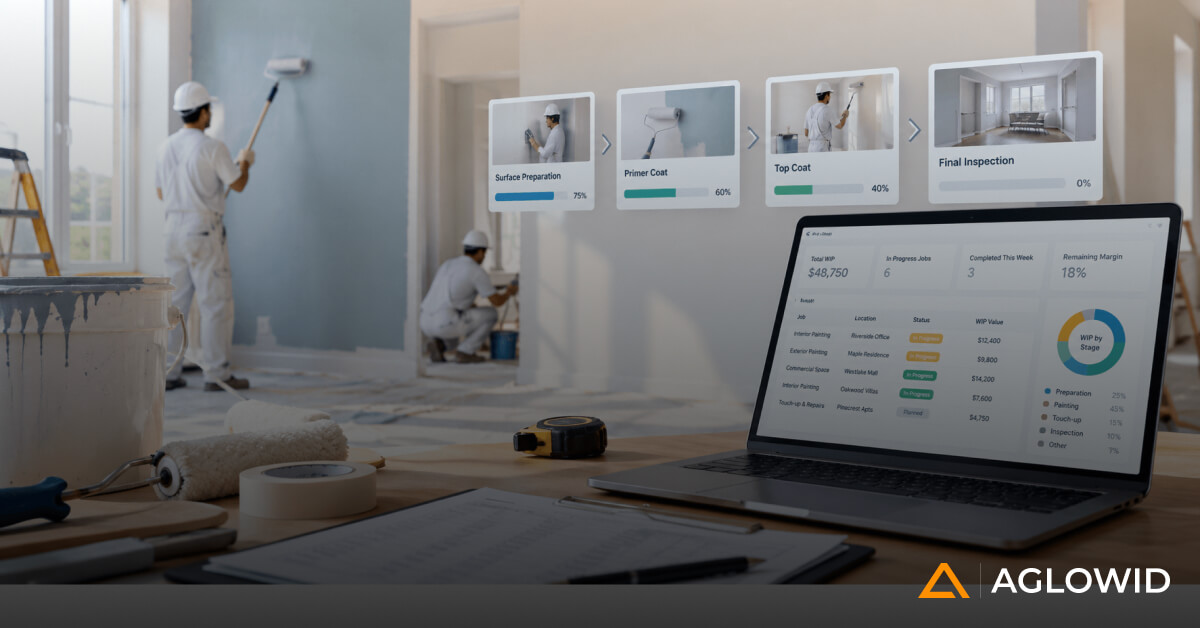
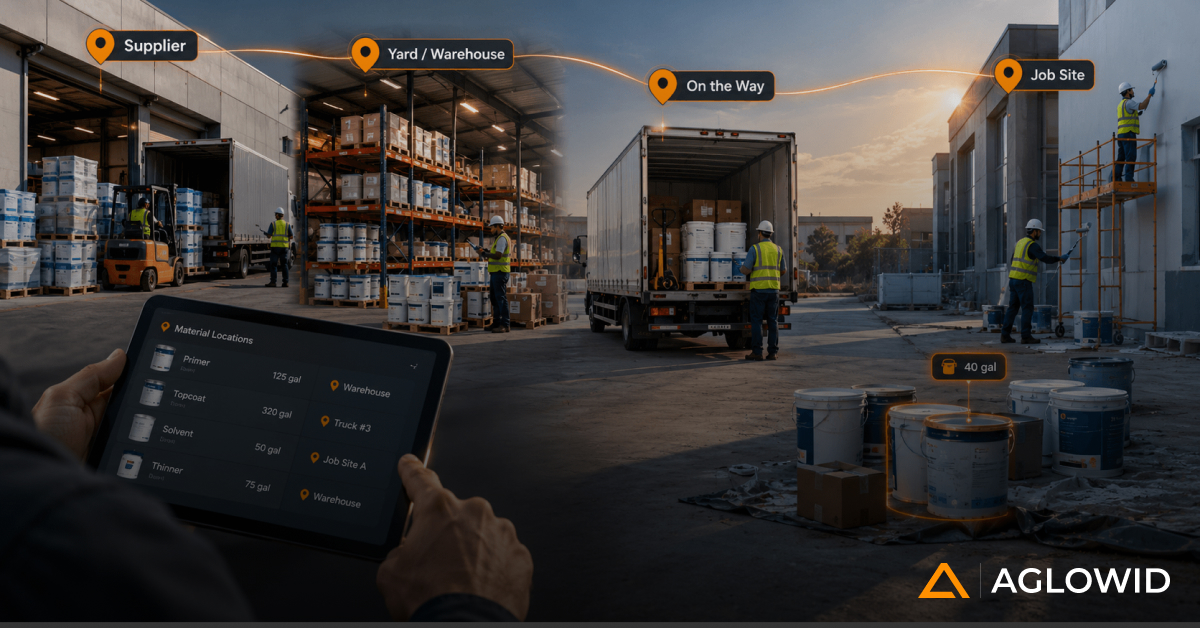
Mobile app integration with construction ERP is transforming how project data flows from site to office. Instead of delayed reporting and fragmented updates, construction firms can now capture real-time site data and instantly reflect its financial impact. This shift enables stronger cost tracking, faster decision-making, and tighter control over project margins. For growing construction companies, it is becoming a critical capability for improving project predictability and operational efficiency.
In many construction projects, execution moves faster than visibility.
Work progresses on-site daily, materials are consumed, labor is deployed, and costs accumulate, but financial visibility into these activities often lags behind. By the time data reaches decision-makers, it is already outdated, making it difficult to control costs or respond to emerging risks.
This disconnect creates a critical challenge for construction companies. Projects may appear on track operationally, while financially they are drifting off course.
The result?
- Budget overruns discovered too late
- Limited control over site-level spending
- Reactive decision-making instead of proactive management
- Margin erosion across projects
At its core, this is not a reporting issue. It is a visibility problem.
Mobile app integration with construction ERP systems addresses this gap by connecting on-site execution directly with financial systems. It enables real-time data flow, continuous cost tracking, and faster decision-making, turning ERP from a back-office system into an operational control platform.
To understand the impact, it is important to first examine where traditional approaches fall short.
The Construction Visibility Gap: Why Real-Time Site Data Still Fails
Projects move fast on-site, but leadership often lacks real-time construction data. Delayed or fragmented reporting obscures cost overruns, schedule risks, and budget control, turning manageable issues into financial surprises. Understanding why site-level data fails to reach decision-makers is the first step toward closing this critical visibility gap.
Why Site-Level Data Does Not Reach Decision-Makers in Time
Even with digital tools, many construction firms in the U.S. struggle to get accurate, real-time project insights. Common pitfalls include:
- Manual data entry or spreadsheet-based reporting
- End-of-day or weekly updates from site teams
- Disconnected tools for tracking labor, materials, and progress
As a result, critical project data is delayed, inconsistent, and fragmented. More importantly, decision-makers are forced to rely on historical data instead of real-time insights, limiting their ability to act quickly.
The Hidden Cost of Delayed Project Visibility in Construction
This delay is not just operational, it directly impacts financial outcomes:
- Cost overruns are identified after escalation
- Budget tracking becomes retrospective instead of continuous
- Cash flow planning becomes uncertain
- Project margins shrink without clear visibility into causes
In essence, lack of real-time visibility converts manageable deviations into financial risks.
This is precisely where mobile-integrated construction ERP changes the equation.
Why Construction Companies Can’t Afford the Lag
For smb or mid market companies, the stakes are even higher: smaller margins, tighter cash flow, and fewer resources to absorb overruns. Delayed data leads to:
- Limited accountability across sites
- Missed opportunities to optimize labor, materials, and equipment
- Reactive rather than proactive project management
- Increased likelihood of margin erosion
By highlighting these risks, it becomes clear that closing the visibility gap is not just a technology choice, it’s a financial and operational imperative.
This is precisely where mobile app integration with construction ERP systems comes into play. By capturing on-site data in real time and feeding it directly into ERP modules, organizations can turn delayed reporting into instant cost visibility, bridging the gap between field operations and financial decision-making.
What Mobile App Integration with Construction ERP Really Means for Contractors
Mobile app integration is more than a convenience, it transforms how on-site data drives decisions across projects. Let’s see why standalone field apps often fall short, how mobile apps act as a real-time data layer within ERP, and the core ERP capabilities enabled by this integration. Together, these points illustrate how contractors can achieve operational control, real-time cost visibility, and smarter project management.
Why Standalone Construction Field Apps Fall Short
Many construction company have already adopted mobile apps for site reporting. However, these tools often operate in isolation.
The result?
- Data captured on-site does not automatically update ERP systems
- Teams still rely on manual consolidation
- Financial systems remain disconnected from field operations
This creates a false sense of digitization without delivering real operational control.
Mobile Apps as a Real-Time Data Layer in Construction ERP
Mobile app integration changes this fundamentally.
Instead of acting as standalone tools, mobile apps become a real-time data capture layer directly connected to the ERP system.
This means:
- Site data flows instantly into project and financial modules
- Updates are visible across teams without delays
- Decision-makers have access to current, accurate information
In essence, mobile integration bridges the gap between field execution and financial oversight.
Core Construction ERP Functions Enabled Through Mobile Integration
Once integrated, mobile apps extend ERP capabilities to the field:
- Real-time project tracking and progress updates
- Procurement and material usage visibility
- Labor tracking and workforce management
- Cost tracking and financial reporting
If you’re evaluating construction ERP and field apps together, explore our custom construction ERP solutions tailored for contractors and builders.
Now, the next logical question is, what kind of data actually drives value when captured in real time?
Check our Success Story
ERP Software for Painting & Coating Contractors
Centralizing Field, Finance, and Compliance with Odoo
Industry: Painting & Coating/Construction
Location: Canada
From On-Site Data Capture to Real-Time Cost Visibility in Construction Projects
Capturing site data is only valuable if it directly drives financial insight and operational control. Let’s explore how construction companies can identify high-impact data points, integrate them into ERP systems, and leverage real-time visibility to move from reactive cost management to proactive project control.
Capturing Critical Construction Site Data in Real Time
Not all data is equally valuable. High-performing construction organizations focus on capturing:
- Daily progress and milestone completion
- Labor attendance and productivity metrics
- Material consumption and wastage
- Equipment usage and downtime
- Site-level expenses and petty cash transactions
For many contractors, especially those working heavily with third-party crews, a large part of this data comes from subcontractor activities, labor, and material usage.
Our deep dive on subcontractor management software for construction shows how structured subcontractor workflows make this data far more reliable before it ever reaches ERP.
The key is not just capturing data, but ensuring it is standardized, structured, and consistently recorded.
Connecting Site Data to Project Cost Tracking and Budget Control
Here’s where the real transformation begins.
When site data is directly integrated into construction ERP systems:
- Material usage updates reflect immediately in cost reports
- Labor inputs impact project cost calculations in real time
- Site expenses are recorded without delay
This enables continuous cost tracking against project budgets, rather than periodic reviews.
Enabling Real-Time Cost Visibility Across Construction Activities
With integrated systems in place, decision-makers gain:
- Project-level cost vs budget visibility
- Activity-level cost breakdowns
- Real-time financial impact of site decisions
This level of transparency allows teams to identify issues as they emerge, not after they escalate.
Moving from Reactive to Proactive Cost Control
This is the real strategic shift.
Instead of reacting to cost overruns:
- Teams can detect deviations early
- Corrective actions can be implemented immediately
- Financial risks can be contained before they grow
As a result, construction companies move toward predictable project outcomes and stronger margin control.
Traditional Construction Reporting vs Mobile-Integrated ERP
To appreciate the strategic impact of mobile integration, it’s useful to compare traditional reporting practices with an ERP-connected mobile workflow and understand how this transformation affects operational control and cost visibility.
| Aspect | Traditional Construction Reporting | Mobile-Integrated ERP |
| Reporting Cycle | Delayed, periodic updates → slows corrective action | Real-time site updates → instant visibility for leadership |
| Cost Tracking | Manual, error-prone → increases reconciliation effort | Continuous, automated → prevents budget surprises |
| Data Sources | Fragmented across spreadsheets and tools → information silos | Unified across field, office, and finance → consistent, reliable data |
| Decision-Making | Reactive → deviations discovered too late | Proactive → issues addressed before they escalate |
| Project Control | Limited oversight → higher risk of delays and margin erosion | Full operational control → predictable project outcomes |
Comparing traditional reporting with mobile-integrated ERP highlights how real-time construction data and ERP connectivity transform decision-making, cost control, and operational efficiency.
Use Case: Real-Time Material Cost Overrun Detection in Construction Projects
To see mobile-integrated ERP in action, consider a scenario where real-time data prevents material cost overruns and protects project margins.
| Scenario Step | Traditional Reporting | Mobile-Integrated ERP |
| Material Usage | Overruns are discovered at the end of the month | Site teams record usage through a mobile app; data is synced instantly to ERP |
| Cost Tracking | Variance appears in delayed reports | Cost variance is reflected the same day in ERP, giving leadership immediate visibility |
| Corrective Action | Interventions occur too late, after overruns have escalated | Project managers identify deviations immediately and implement corrective actions |
| Outcome | Escalated costs, reduced margins, reactive decision-making | Faster response, controlled costs, protected margins, and proactive project control |
Mobile-integrated ERP allows teams to detect deviations as they happen, take immediate corrective action, and maintain project budgets and margins. Over time, this proactive approach drives predictable financial outcomes, better cash flow management, and stronger operational efficiency.
This example shows the tangible impact of integrating site data into ERP. Similar principles apply to labor, equipment, and other site-level costs, which collectively improve visibility and decision-making across the organization.
Business Impact of Mobile-Integrated Construction ERP Across Key Roles
Mobile-integrated ERP delivers measurable impact across every function, transforming project execution, financial control, operations, and strategic decision-making. The benefits extend from site teams to executives, ensuring the entire organization operates more efficiently and profitably.
| Role | ERP Capability Enabled | Business Impact / Outcome |
| Project Managers | Real-time project tracking and execution control | Immediate visibility into site progress → reduces schedule delays, improves team coordination, and accelerates reporting cycles |
| Finance Teams | Continuous cost updates and financial integration | Automated cost tracking → reduces reconciliation effort, improves accuracy, and enables proactive financial oversight |
| Operations Leaders | Multi-project visibility and resource optimization | Centralized project view → better allocation of labor and equipment, standardized performance tracking, and improved operational efficiency |
| Executives (CEO/CFO) | Portfolio-level insights and forecasting | Data-driven decision-making → strengthens profitability control, improves forecasting, and enhances margin predictability |
By clearly linking ERP capabilities to role-specific business outcomes, entities can see how mobile-integrated ERP drives value across the organization, rather than benefiting only one function.
This role-based visibility lays the foundation for quantifiable efficiency gains and measurable ROI, which we’ll explore in the next section.
Strategic and Operational Benefits of Mobile-Integrated Construction ERP Systems
Mobile app integration with construction ERP delivers tangible operational and financial benefits for an organization. By connecting real-time site data directly to ERP, decision-makers gain instant insight, stronger cost control, and predictable project outcomes.
Real-Time Cost Tracking and Budget Control
Continuous data flow from the site to ERP gives leadership:
- Immediate visibility into project costs, ensuring deviations are spotted before they escalate
- Ongoing tracking of cost vs budget, supporting proactive financial management
- Faster identification of budget deviations, enabling corrective action in real time
This tightens financial control across all active projects and protects margins.
Faster Billing Cycles and Improved Cash Flow
With mobile-integrated ERP:
- Work completion is recorded instantly, reducing delays in billing
- Revenue recognition becomes more accurate, improving financial reporting
- Billing processes are accelerated, boosting cash flow predictability and working capital management
Finance teams benefit from streamlined processes and faster revenue realization, critical for that industry.
Reduced Project Delays and Rework
Real-time updates and improved coordination allow teams to:
- Identify execution issues earlier, minimizing schedule disruptions
- Reduce miscommunication between site and office
- Implement corrective actions faster, lowering rework costs
Project managers gain better schedule control, ensuring timely delivery and improved client satisfaction.
Lower Cost Leakage Across Projects
Mobile-integrated ERP eliminates hidden inefficiencies by:
- Tracking material usage accurately, reducing waste
- Monitoring labor productivity in real time, improving workforce efficiency
- Capturing site expenses immediately, preventing unnoticed cost overruns
- Improving equipment and fleet utilization, reducing idle time and unplanned downtime
For firms with significant heavy equipment on projects, construction fleet management software can complement ERP by tightening how asset usage, fuel, and maintenance events feed into your cost picture.
This ensures cost discipline and predictable financial performance.
Improved Margin Predictability
By combining operational data with financial tracking:
- Project performance becomes transparent, enabling smarter forecasting
- Deviations are detected early, allowing proactive profitability management
- Leadership can maintain consistent margins across projects
Strengthening ERP as a Single Source of Truth
Beyond individual benefits, mobile integration transforms ERP into a central operational system:
- All project data is centralized, ensuring consistency and reliability
- Data flows seamlessly from site execution to financial systems, eliminating duplicate entries
- Standardized processes scale across multiple projects, supporting controlled growth
The Bigger Picture
Mobile-integrated ERP is no longer just a convenience layer. For construction company, it becomes a strategic capability:
- Enables faster, data-driven decision-making
- Improves margin predictability and cost control
- Streamlines operations, increasing overall efficiency and scalability
With operational and financial benefits established, the next focus is on integration architecture and adoption strategies, showing how firms can maximize ROI and overcome common implementation challenges.
Key Challenges in Mobile App for Construction ERP Adoption
Implementing mobile-integrated ERP on construction sites brings clear strategic benefits, but they often face real-world hurdles. Addressing these effectively ensures consistent data capture, operational efficiency, and accurate project insights.
Many of these hurdles mirror the reasons ERP implementations fail in the first place, from weak adoption to inconsistent data discipline.
For leaders who want to avoid repeating those mistakes, this overview of common ERP implementation failure patterns can help you anticipate and mitigate risks early.
Resistance to Mobile Adoption on Construction Sites
Construction teams may hesitate to adopt new mobile tools if they’re used to spreadsheets or paper-based reporting. Providing hands-on training with practical demonstrations and highlighting the efficiency and ease of mobile ERP helps teams embrace the system quickly, ensuring timely and accurate data from every site.
Lack of Standardized Data Entry Across Projects
Inconsistent data entry can fragment information, making real-time ERP insights unreliable. Establishing structured workflows and clear guidelines for all site teams creates consistency across projects, supporting reliable reporting, proactive cost management, and improved forecasting.
Connectivity Challenges in Remote Construction Locations
Remote sites often experience limited network access, which can delay updates to ERP. Using offline-capable mobile applications ensures teams can continue logging data without interruption, with automatic synchronization when connectivity is restored. This maintains continuous visibility into costs, progress, and site performance.
Inconsistent Usage Across Teams and Projects
Even with mobile ERP deployed, inconsistent adoption can undermine its value. Setting expectations for usage, governance frameworks, and monitoring engagement ensures that all teams contribute to real-time data capture, improving project control and operational efficiency.
Training Gaps and User Adoption Barriers
Insufficient training can reduce engagement and data accuracy. Delivering role-specific training and ongoing support, along with feedback loops, helps site teams quickly adapt, improving financial oversight, operational reliability, and margin predictability.
By addressing these common adoption challenges strategically, the organization can fully leverage mobile-integrated ERP to improve project visibility, cost control, and decision-making, setting the stage for operational efficiency and measurable ROI.
A Practical Roadmap for Implementing Mobile-Integrated Construction ERP
For construction companies, successful mobile ERP adoption requires a structured, phased approach that prioritizes high-impact areas and ensures measurable business outcomes, similar to what you would follow in any well-planned ERP rollout.”
“If you are still shaping your overall rollout strategy, this guide on ERP implementation best practices is a useful starting point before layering mobile integration on top.
1. Identify High-Impact Use Cases
Focus on areas that deliver immediate operational and financial value, such as:
- Real-time cost tracking to prevent budget overruns
- Daily progress and milestone reporting to maintain schedule visibility
Prioritizing these use cases ensures that teams experience quick wins and recognize the tangible benefits of mobile ERP early on.
2. Start with Pilot Projects Before Full Deployment
Test mobile ERP on select projects to:
- Validate workflows and data accuracy
- Refine mobile processes based on real-world site feedback
- Build confidence among project managers and site teams
Piloting reduces risk, smooths adoption, and provides proof points for wider deployment.
3. Define Data Ownership and Accountability at Site Level
Clear responsibility ensures that:
- Site teams consistently capture accurate data
- ERP receives reliable, real-time inputs for cost, labor, and material tracking
This promotes data discipline and strengthens the foundation for financial visibility and margin control.
4. Integrate Mobile Apps with Core ERP Modules
Start with finance and project management modules, enabling:
- Real-time cost visibility across projects
- Automated updates to budgets, billing, and resource tracking
- Seamless connectivity between field execution and back-office reporting
Integration ensures mobile data drives strategic decision-making and operational efficiency.
5. Scale Across Projects with Standardized Processes
Once workflows are validated:
- Expand gradually across all projects
- Standardize mobile reporting, approvals, and data capture processes
- Maintain consistency while scaling, ensuring operational reliability and predictable project outcomes
Maximizing Value Post-Implementation: KPIs, Continuous Improvement, and Scaling
Successfully implementing mobile-integrated ERP is just the first step. To turn adoption into measurable operational and financial advantage, construction enterprises must focus on tracking performance, refining processes, and scaling adoption strategically.
Track Key Metrics and Demonstrate ROI
To ensure the investment delivers tangible benefits:
- Monitor real-time cost tracking, including deviations from budget and material overuse
- Track project schedule adherence to detect delays before they escalate
- Measure labor productivity and equipment utilization to identify efficiency gaps
- Monitor billing cycle times and cash flow improvements
By linking mobile ERP data to these metrics, leadership can quantify ROI, justify further investment, and maintain financial control across projects.
Continuous Improvement Through Feedback Loops
Mobile ERP adoption should be iterative, not static. Regularly:
- Collect feedback from site teams, project managers, and finance teams
- Refine workflows and data capture processes based on real-world usage
- Update dashboards and automated alerts to ensure decision-makers always have actionable insights
This approach strengthens data accuracy, adoption consistency, and operational visibility, keeping projects on track and within budget.
Scaling Across Projects and Locations
Once workflows are validated and ROI is demonstrated:
- Extend mobile ERP adoption to all active projects, offices, and departments
- Standardize reporting, approvals, and data capture processes to maintain consistency and reliability
- Leverage cross-project analytics to guide portfolio-level decisions and resource allocation
Scaling in a controlled, structured manner ensures that the full strategic value of mobile-integrated ERP is realized across the organization.
Turning Mobile-Integrated ERP Into a Strategic Advantage
Beyond immediate efficiency gains, mobile ERP becomes a core capability for proactive management and growth:
- Provides real-time operational and financial visibility across the enterprise
- Enables data-driven decisions that improve margin predictability and cost control
- Supports long-term scalability, ensuring the organization can confidently take on larger or more complex projects
For contractors, this means that ERP is no longer just a reporting tool, it’s a competitive advantage, a decision-making engine, and a foundation for sustainable growth.
Conclusion: Mobile-Integrated Construction ERP as a Competitive Advantage
Construction corporations are under increasing pressure to deliver projects faster, manage costs more effectively, and maintain predictable margins.
Mobile app integration with construction ERP is not just a technology upgrade. It is a shift toward real-time operational control and financial visibility.
Organizations that adopt this approach gain:
- Faster execution cycles
- Stronger cost control
- Improved decision-making capabilities
Ultimately, this positions them to scale with confidence and compete more effectively in an increasingly complex construction environment.