Quick Summary
Construction projects today generate far more digital information than they did a decade ago. Digital drawings, mobile field reports, connected equipment, and cloud platforms have made project data richer and more abundant than ever. But that abundance has a cost. Maintaining accurate documentation, clean audit trails, and regulatory compliance has become harder, not easier, as data multiplies across disconnected systems. Compliance 4.0 is the operational response to this gap. It is an approach that embeds compliance into everyday digital workflows instead of treating it as a separate, after the fact activity, and for construction companies, a connected ERP platform is what makes that approach possible at scale.
Walk onto almost any active job site today and you will notice something that would have looked out of place there fifteen years ago. A site engineer pulls up a live BIM model on a tablet instead of unrolling a paper drawing. A drone passes overhead, logging progress against the schedule automatically. A supervisor closes out a digital inspection checklist before the concrete has even fully cured, and somewhere in the back office, a dashboard updates in real time to reflect it. None of this is experimental anymore. It is simply how modern construction runs, from mobile field reporting and connected equipment to cloud collaboration platforms, IoT enabled asset tracking, digital procurement, and a growing list of ESG and sustainability disclosures that owners now expect as a matter of course.
What has changed alongside the technology is who is watching, and how closely. Multiple subcontractors now work the same project in parallel, each generating their own stream of data. Client reporting requirements have grown more detailed. Contractual accountability has grown sharper. By almost every visible measure, the industry has become digital.
And yet, walk into the site trailer or the back office of the same project, and you will often find compliance still running the way it did twenty years ago: a spreadsheet someone updates when they remember to, an inbox full of approval chains nobody can fully reconstruct, a stack of scanned PDFs standing in for a real audit trail. The project became digital. Compliance did not keep up.
That mismatch, a digital project managed by an analog compliance process, is precisely the gap Compliance 4.0 is trying to close, and it is worth understanding why that gap opened up in the first place before looking at what closes it.
Why Construction Is Moving Toward Compliance 4.0
Modern construction isn’t only becoming digital. It’s becoming more connected, more data driven, more regulated, and more transparent, all at the same time. Each of these shifts on its own would justify a new approach to compliance. Together, they make the old approach untenable.
More Connected
Projects now involve owners, architects, consultants, contractors, subcontractors, suppliers, and regulators, all sharing information across multiple digital platforms that were rarely designed to talk to one another.
More Data Driven
Nearly every activity on a job site now generates a digital record: site inspections, equipment usage logs, worker attendance, material deliveries, daily reports, progress updates, quality inspections, and safety observations.
More Regulated
Companies increasingly need to demonstrate compliance with occupational health and safety requirements, environmental regulations, building codes, contractual obligations, client specific quality standards, and workforce certification rules, often simultaneously and across multiple jurisdictions.
More Transparent
Owners and investors expect real time project visibility, faster reporting, digital evidence, accurate documentation, and traceable approvals, not a folder of paperwork handed over at closeout.
The scale of what’s at stake here is not abstract. According to McKinsey Global Institute research, digital transformation in engineering and construction can unlock productivity gains of 14 to 15 percent and cost reductions of 4 to 6 percent, yet construction remains one of the least digitized major sectors in the global economy. Historically, construction firms have spent less than 1 percent of revenue on IT, a fraction of what industries like automotive and aerospace typically invest. That underinvestment shows up directly in delivery performance: large projects across asset classes typically run 20 percent longer than scheduled and can run up to 80 percent over budget.
Traditional compliance methods, built for a paper-based, single-party world, were never designed for this level of operational complexity. That’s why the industry is moving toward Compliance 4.0.
What Compliance 4.0 Actually Means in Construction
Stripped of buzzwords, Compliance 4.0 applies the core principles of digital transformation to compliance management.
Instead of documenting activities after they happen, teams create continuous digital records as work progresses. Instead of relying on disconnected documentation scattered across inboxes and drives, Compliance 4.0 connects project operations, quality management, safety, procurement, equipment, workforce, and finance into a single traceable compliance ecosystem.
The difference between the two models becomes clearer side by side:
| Dimension | Traditional Compliance | Compliance 4.0 |
| When records are created | After the fact, often days or weeks later | In real time, as work happens |
| Where evidence lives | Emails, paper forms, local spreadsheets | A connected digital system of record |
| How approvals move | Manual sign off, chased by phone or email | Configurable digital workflows |
| Audit readiness | Reconstructed under pressure before an audit | Continuously available on demand |
| Visibility for leadership | Periodic reports, often stale by the time they’re read | Real time dashboards |
| Ownership | Treated as a compliance department task | Embedded into daily project execution |
As the Arcadis 2025 Global Construction Disputes Report found, one of the most common contributors to construction disputes is project stakeholders simply failing to understand or comply with contractual obligations, not fraud or bad intent, but a documentation and process gap that better systems could have closed.
Once this gap is understood, the natural next question is what it looks like in practice, across an actual project.
What Compliance 4.0 Looks Like During a Construction Project
Picture a single project lifecycle, from award to handover:
Planning to Procurement to Material delivery to Site execution to Safety inspection to Quality inspection to Progress billing to Project handover
How Evidence Builds at Each Stage
In a Compliance 4.0 environment, each stage generates its own compliance evidence automatically, as a byproduct of the work itself, rather than as a separate task bolted on afterward.
- During planning, approved scopes, budgets, and permits are captured digitally and linked to the project record from day one.
- During procurement, purchase orders, vendor qualifications, and contract terms are logged with full version history.
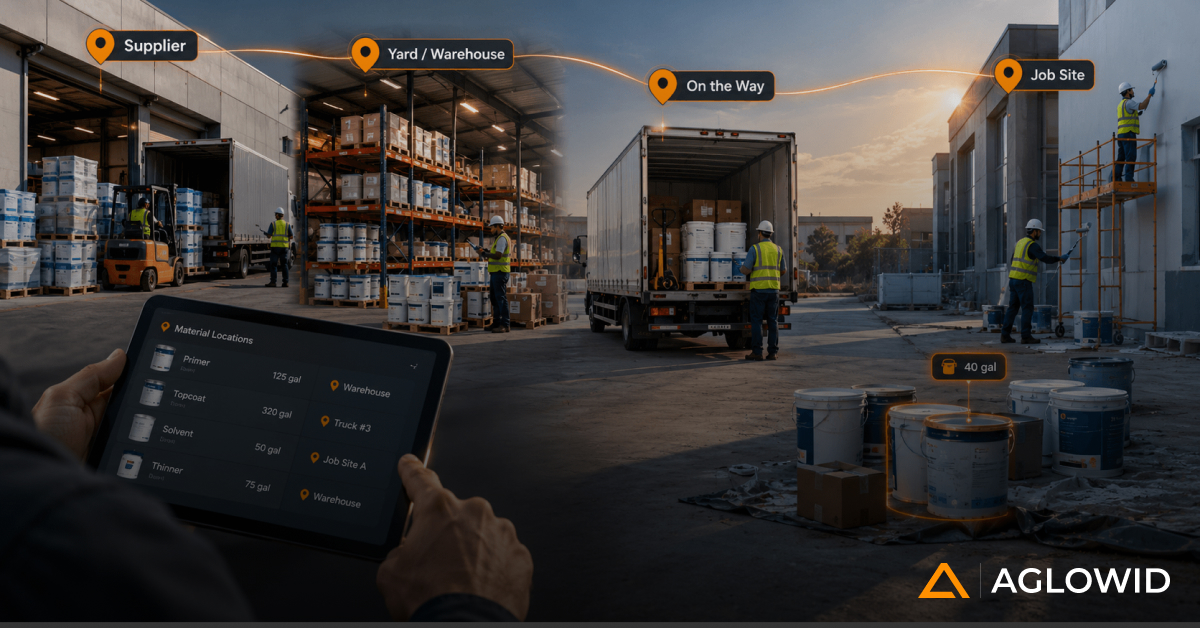
- During material delivery, delivery tickets, quality certificates, and receiving inspections are timestamped and tied to the relevant purchase order automatically.
- During site execution, daily logs, labor records, and equipment usage are captured from mobile devices in the field, not reconstructed from memory at the end of the week.
- During safety inspection, digital checklists, photos, and corrective actions are recorded with the inspector, date, and location attached.
- During quality inspection, non-conformance reports and their resolutions are tracked against the specific work package involved.
- During progress billing, the billing amount is directly traceable to verified completed work and verified inspections, not an estimate.
- At project handover, the entire chain, design intent, approvals, inspections, and as-built conditions, is available as a single connected record instead of a box of binders.
This is the practical difference Compliance 4.0 makes: evidence stops being something a team scrambles to assemble and becomes something that already exists, because it was created the moment the work happened.
Check our Success Story
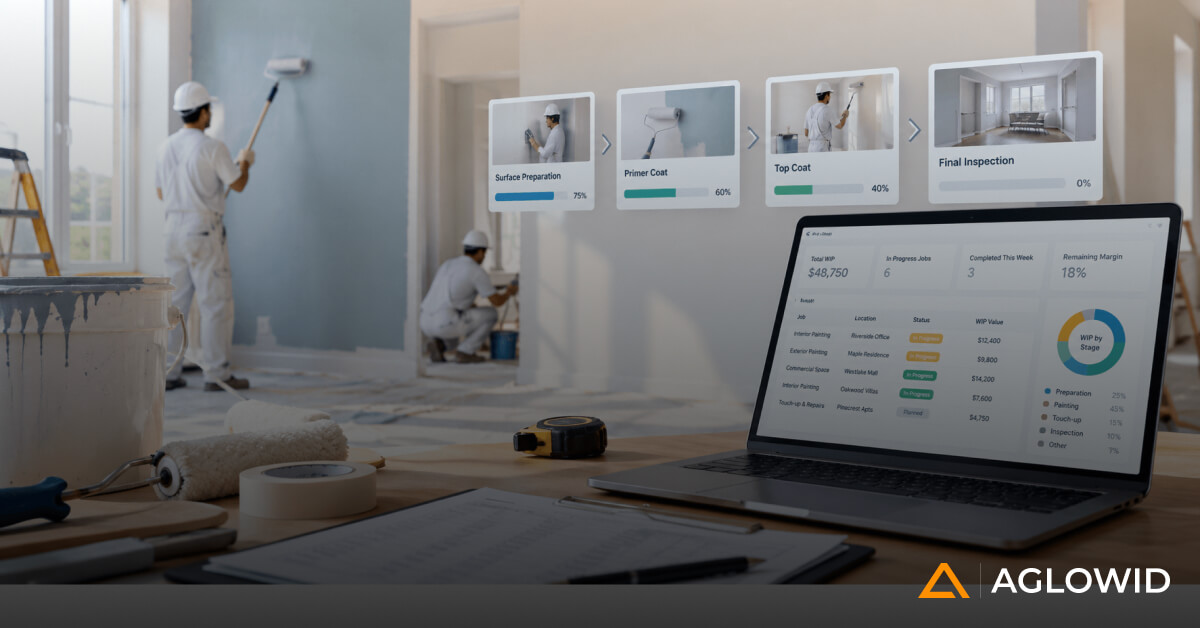
ERP Software for Painting & Coating Contractors
Centralizing Field, Finance, and Compliance with Odoo
Industry: Painting & Coating/Construction
Location: Canada
Why Connected Audit Trails Matter Beyond Regulatory Compliance
It’s tempting to think of compliance purely as a regulatory checkbox. In construction, the value of a connected audit trail extends far past the regulator’s desk.
Claims and Disputes
When a disagreement arises over scope, delay, or defective work, the party with the clearest, timestamped record of what actually happened usually holds the stronger position. This is not a small consideration. The Arcadis 2025 Global Construction Disputes Report found that the average value of a construction dispute in the United States is $60.1 million, and disputes in North America take an average of 12.5 months to resolve. A connected audit trail is often the single biggest determinant of how quickly, and how favorably, a dispute gets settled.
Client Audits
Institutional owners, government agencies, and lenders increasingly run their own compliance audits mid-project, not just at closeout. A connected ERP system means a company can respond to those requests in hours, not weeks.
Insurance and Warranty
Insurers and warranty providers increasingly want documented evidence of inspections, materials used, and installation methods, particularly for high-value or long-duration warranty claims.
Internal Governance
Beyond any external party, leadership needs to know, in real time, whether the organization’s own standards are being followed consistently across every active project, not just the ones someone happens to be watching closely.
Bridging from external accountability to internal financial performance, the next question worth asking is a harder one: what does poor documentation actually cost a project’s bottom line?
Compliance, Financial Accuracy, and Project Profitability
This is the piece of the story that gets the least attention, and it deserves the most.
Missing or fragmented documentation doesn’t just create compliance risk. It quietly erodes profitability, month after month, project after project.
Consider progress billing. If completed work can’t be verified against inspection records in real time, billing gets delayed, disputed, or under-claimed, straining cash flow on projects that are often already thin on margin. Change orders face the same problem: without a clear, connected record of what was authorized and when, change order approvals slow down and revenue recognition drags behind actual project progress. Retention releases stall for the same reason, tying up capital that should already be back in the business. Supplier payments become harder to reconcile when delivery and inspection records live in different systems than the invoices they’re meant to match.
The scale of this hidden cost is well documented. A joint industry study by FMI Corporation and PlanGrid found that U.S. construction professionals lose nearly 14 hours per week, roughly 35 percent of their time, on non-optimal activities such as searching for project information, resolving conflicts, and redoing work, costing the U.S. construction industry more than $177 billion annually in labor costs alone. Within that figure, poor project data and miscommunication were found to drive 48 percent of all rework, amounting to roughly $31.3 billion a year in the United States. More recent field research from Bluebeam found that 72 percent of AEC firms still rely on paper in at least one project phase, operating across an average of 11 separate data environments, with the median rework event alone costing around $8,300 and adding 3.4 days to the schedule.
Firms with documented quality and communication standards keep rework below 5 percent of project budget. Firms without them run two to three times that rate. On a $30 million project running 6 percent margins, that gap is the difference between a profitable job and a year of work that cost the company money.
That single comparison is, in many ways, the entire business case for Compliance 4.0 in one sentence. Which naturally raises the next question: what actually makes this level of connection possible.
The Technology Foundation Behind Compliance 4.0
No single tool delivers Compliance 4.0 on its own. It emerges from several categories of technology working together as one connected system rather than as isolated point solutions.
The Operational Backbone
A connected ERP platform sits at the center, tying together project operations, procurement, finance, and workforce data into one system of record.
Document and Design Layer
Document Management Systems (DMS) and BIM integration keep drawings, specifications, and revisions synchronized across every party working from them.
Field Capture Layer
Mobile field applications, digital forms, and digital inspections replace paper checklists with structured, timestamped data captured at the point of work.
Process Layer
Workflow automation and electronic signatures move approvals through the system automatically, instead of relying on someone remembering to chase a signature.
Sensing Layer
IoT-connected equipment, where relevant, adds real time usage and condition data without manual entry.
Access and Visibility Layer
Cloud collaboration platforms, role-based access controls, and real-time dashboards make sure the right people see the right data at the right level of detail, and nothing more.
None of these technologies deliver Compliance 4.0 in isolation. A brilliant mobile inspection app that doesn’t talk to procurement, or a BIM model that doesn’t connect to site execution, still leaves gaps for compliance risk to hide in. The value shows up only when these layers work together to create a single, traceable record of the project. That is precisely the role a connected ERP is built to play: not one more tool in the stack, but the backbone that keeps every other tool honest and in sync.
Which raises a fair and practical question for any executive evaluating this shift: what should you actually look for in an ERP that claims to support this model.
Choosing an ERP That Supports Compliance 4.0 for Construction
Not every ERP platform is built with compliance as a first-class citizen. When evaluating one, look past the feature list and toward a few capabilities that determine whether Compliance 4.0 is actually achievable, or just a slide in a sales deck:
- Connected operational and financial data. Project activity and financial transactions should live in the same system, not be reconciled between two.
- End-to-end document traceability. Every document, drawing, and approval should be traceable back to the activity, contract, and person that generated it.
- Configurable approval workflows. Approval chains should match how your organization actually works, not force a generic process onto every project type.
- Version control. Every revision to a drawing, contract, or specification should be tracked, not overwritten.
- Mobile field capture. Field data should enter the system at the point of work, not get transcribed from a notebook back at the office.
- Automated audit trails. The system should generate the audit trail as a natural byproduct of normal use, not as a separate reporting exercise.
- Real-time compliance reporting. Leadership should be able to see compliance status today, not last month’s snapshot.
- Integration with existing construction technologies. The ERP needs to connect cleanly with BIM tools, field apps, and scheduling platforms already in use, rather than requiring a rip-and-replace of everything else.
An ERP that checks these boxes doesn’t just support compliance reporting. It becomes the connective tissue that makes every other section in this article operationally real.
Common Mistakes Companies Make When Modernizing Compliance
Knowing what good looks like is only half the picture. It’s just as important to recognize where digital compliance initiatives commonly go wrong, because these mistakes show up far more often than most companies expect.
Digitizing Paper Without Improving the Process
Many companies replace paper forms with PDFs or basic digital forms but keep the exact same manual, sequential approval process behind them. The format changes. The bottleneck doesn’t.
Treating Compliance as a Separate Department
Compliance that only shows up when an auditor arrives is compliance that’s already too late. It needs to be embedded into how project execution actually happens, day to day.
Using Disconnected Systems
Project management, procurement, finance, safety, and document management often operate as separate silos, each with its own version of the truth, creating fragmented records that no one can fully reconcile.
Focusing Only on Document Storage
Storing documents isn’t enough on its own. What matters is the relationship between documents, approvals, financial transactions, and the project activities they relate to. A folder full of PDFs with no connective structure is not an audit trail.
Ignoring Change Management
Even the best technology fails if teams quietly keep using email, spreadsheets, or messaging apps for approvals and record keeping because it’s more familiar. Adoption, not procurement, is usually where these initiatives actually succeed or fail.
Recognizing these mistakes matters because they shape a more realistic, and more reassuring, path forward.
The Road to Compliance 4.0 Doesn’t Have to Be a Complete System Replacement
Many decision-makers assume Compliance 4.0 means ripping out every existing system and starting over. It doesn’t. In practice, it’s better approached as an incremental journey, built in phases:
| Phase | Focus |
| Phase 1 | Centralize project documents and standardize approval workflows |
| Phase 2 | Connect procurement, inventory, and finance; introduce digital inspections and mobile field reporting |
| Phase 3 | Integrate quality, safety, equipment, and subcontractor management; build real-time dashboards and automated audit trails |
| Phase 4 | Integrate BIM, scheduling platforms, IoT, and client portals where they deliver measurable, proven value |
The key message worth repeating to any leadership team considering this shift: Compliance 4.0 is not a product you buy off a shelf. It’s an operating model you build over time, one connected layer at a time, with each phase earning its way onto the next.
Construction executives generally trust a realistic, phased roadmap far more than promises of an instant, all-at-once transformation, and for good reason: it mirrors how the best-run projects are actually delivered, in sequence, with each stage verified before the next begins.
Conclusion
Three ideas are worth carrying forward from everything above.
First, construction projects are becoming more connected and more complex, faster than most compliance processes have kept pace with. Second, Compliance 4.0 is fundamentally about embedding traceability into everyday operations, not piling on more paperwork. Third, a connected ERP provides the operational foundation that brings projects, procurement, finance, quality, safety, and documentation together into one auditable system, rather than a scattered collection of good intentions.
The industry-wide numbers make the stakes hard to ignore: tens of billions lost annually to rework driven by poor data, disputes averaging tens of millions of dollars apiece, and regulatory penalties that climb every year. None of that is inevitable. Most of it is a symptom of disconnected systems, not an unavoidable cost of doing business in construction.
If there’s one question worth taking back to your own organization this week, it’s this: where in your current compliance process are you still relying on someone’s memory, a scattered inbox, or a spreadsheet that only one person really understands? That question, more than any technology decision, is usually where the real risk is hiding, and where a connected approach to compliance starts paying for itself.
Ready to see how ERP software can transform your compliance operations?
Schedule a personalized walkthrough and see how contractors like yours are managing compliance, payroll, and project documentation in one platform.