Quick Summary
In the age of AI-driven decision-making, ERP systems are no longer just repositories of business data, they are active engines powering forecasting, automation, and strategy. That shift raises the stakes significantly, because even small inconsistencies can cascade into costly errors at scale. Data Integrity in ERP has therefore moved from a backend concern to a frontline business priority for SMB decision makers evaluating modernization. Within this context, this article explores why maintaining clean, consistent, and trustworthy data is now essential to unlocking the full value of AI, automation, and next-generation ERP capabilities.
What if the numbers your leadership team relies on every day… are wrong, but look perfectly fine?
That’s the uncomfortable reality many SMBs are operating in today. Reports reconcile, dashboards look clean, and yet decisions based on them quietly drift off course. The real risk is not bad data you can see, it’s the “almost correct” data that flows through your ERP, into AI models, and straight into strategic decisions.
The scale of this problem is far from theoretical. According to IBM, over 25% of organizations estimate losing more than $5 million annually due to poor data quality, and nearly half of business leaders say data issues are a major barrier to scaling AI initiatives.
Now layer AI on top of that. Automation doesn’t fix bad data, it amplifies it. Forecasting models, financial planning tools, and AI agents all assume your ERP data is trustworthy. When it’s not, the consequences multiply faster, and at a scale most systems were never designed to catch.
This is where the conversation shifts. Data integrity in ERP is no longer a technical hygiene issue, it’s a strategic control point. And in this blog, we’ll unpack why organizations that treat it as a core modernization mandate are the ones actually unlocking ROI from AI, while others remain stuck questioning their own numbers.
Most ERP implementations are not failing because of the software. They are failing because of the data inside it. And as AI becomes central to how businesses operate and make decisions, that problem is no longer a back-office inconvenience. It is a strategic liability.
ERP Has Evolved. Has Your Data Strategy Kept Up?
The shift from system of record to system of intelligence
ERP was designed to be the single source of truth across finance, supply chain, operations, and HR. For decades, that meant recording transactions accurately. That was enough.
It is not enough anymore. Modern ERP systems are expected to do more than record. They are expected to reason. To surface insights. To trigger automated workflows. To feed AI models that inform decisions in real time. The moment ERP becomes a system of intelligence, the quality of every data input becomes a business-critical variable.
Why AI amplifies the consequences of poor data integrity in ERP
AI does not question its inputs. It learns from them, scales from them, and acts on them. A forecasting model trained on inconsistent inventory data does not know the data is inconsistent. It simply generates confident predictions based on flawed inputs, and those predictions drive purchasing, staffing, and capital allocation decisions.
Poor data integrity in an ERP system without AI produces bad reports. Poor data integrity in an AI-enabled ERP system produces bad decisions at scale, automatically, and often without a human review point in between.
The risk is not that AI will fail. The risk is that it will succeed at doing exactly what you asked it to do, with data that was never trustworthy to begin with.
The gap between what leadership assumes and what actually exists
In most mid-market organizations, there is a significant gap between what the leadership team believes about their data quality and what is actually in the system. Executives see dashboards. They rarely see the underlying data model, the duplicate vendor records, the manually adjusted entries, or the integration failures that have been patched with spreadsheets.
Closing that gap is the first act of ERP data governance. And it starts with being honest about the current state.
What Data Integrity in ERP Actually Means for Business Leaders
Data integrity is not the same as data quality. It is not just about fixing typos or removing duplicates. It is a broader assurance that data is accurate, consistent across systems, complete, traceable, and available when decisions need to be made.
Accuracy, consistency, and completeness: why all three must coexist
A customer record can be accurate in the CRM and inconsistent in the ERP. An invoice can be complete in accounts payable and missing a cost centre code that breaks downstream reporting. Data integrity requires all three properties to hold simultaneously, across every system the data touches.
The table below captures the five core dimensions of data integrity and what each one means in an ERP context:
| Dimension | What It Means | Why It Matters in ERP |
| Accuracy | Data reflects the real-world value it represents | Wrong values produce wrong outputs in every downstream process |
| Consistency | The same data means the same thing across all systems | Prevents conflicting reports between finance, ops, and sales |
| Completeness | All required fields are populated with valid values | Missing fields break automation rules and skew analytics |
| Timeliness | Data is available when decisions need to be made | Stale data causes errors in real-time workflows and AI models |
| Traceability | Every record can be traced to its origin and history | Audit readiness, compliance, and anomaly investigation all depend on this |
Data lineage and traceability: knowing where your numbers come from
In an AI-driven environment, it is not enough to know what a number is. You need to know where it came from, when it was last updated, and what processes touched it along the way. Data lineage is what allows you to audit a decision, investigate an anomaly, or defend a financial position under regulatory scrutiny.
Master data vs transactional data: why both carry equal risk
Master data includes customers, vendors, products, and cost centres. Transactional data includes invoices, purchase orders, and journal entries. Most organizations focus their cleanup efforts on one or the other. The reality is that corrupted master data infects every transaction that references it, and uncontrolled transactional data accumulates errors that eventually undermine reporting you rely on every quarter.
Where Data Integrity Breaks in Most SMB ERP Environments
Data integrity problems rarely appear all at once. They accumulate quietly, across departments and systems, until something goes wrong at the worst possible moment.
Siloed systems and fragmented data sources
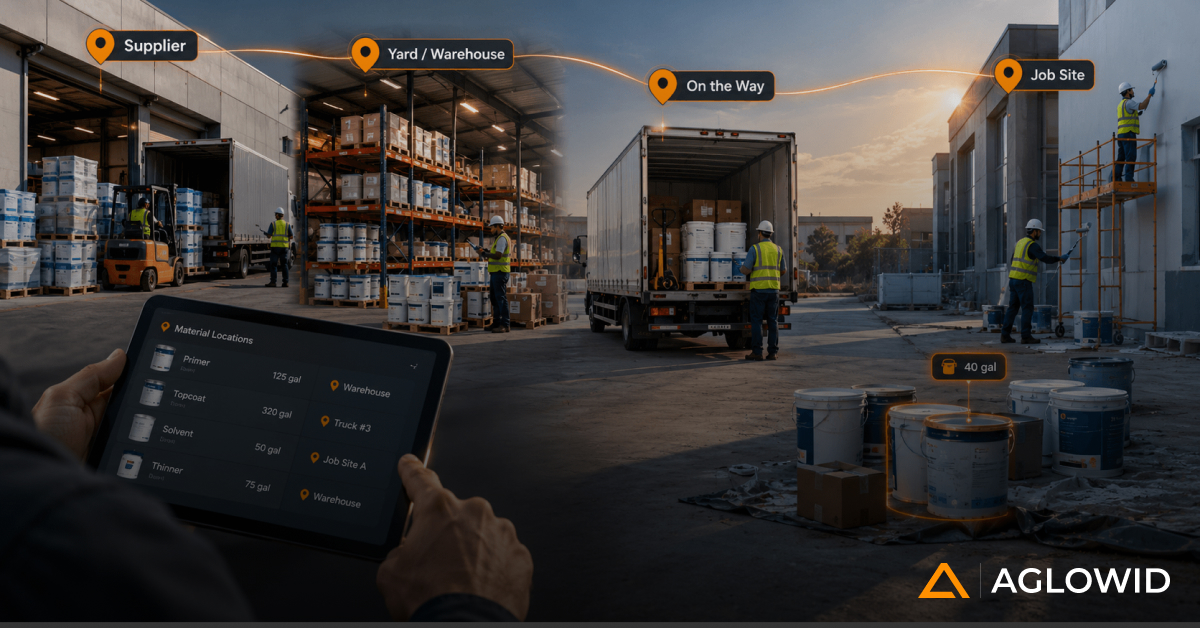
When finance runs on one platform, operations on another, and sales on a third, data about the same business event gets recorded differently in each system. There is no single version of a customer, a product, or a transaction. Each integration point becomes a potential point of divergence.
Manual entry and spreadsheet dependencies
Every manual entry is a potential error. Every spreadsheet used as a bridge between systems is a governance gap. In most SMB environments, there are far more of these than leadership is aware of. When those spreadsheets become inputs to automated processes or AI models, the errors they carry get embedded into outputs that look authoritative.
Weak governance, access gaps, and no single source of truth
When multiple people can edit the same records without controls, and when there is no defined owner for a data domain, inconsistency is the inevitable outcome. The absence of role-based access and audit trails means there is no accountability when something changes unexpectedly and no way to trace it after the fact.
Poor integration between legacy and modern systems
Legacy systems were not designed to integrate cleanly with modern platforms. Data mappings are often approximate. Field definitions differ. Synchronization is batch-based rather than real-time. The result is a persistent lag between what one system knows and what another reflects, and decisions made at the seam of those systems are always operating on incomplete information. If you are still running critical workflows on older platforms, a structured legacy system migration can be the point where you redesign data models and integrations with integrity in mind instead of copying old issues forward
What It Actually Costs When ERP Data Integrity Fails
A scenario: inventory mismatch and its ripple across the business
Consider a mid-sized manufacturer running finance and warehouse management on separate platforms with a nightly sync. A bulk shipment is received in the warehouse system at 4pm. The sync runs at midnight. A sales rep checks inventory availability at 6pm and sees the pre-shipment number. They commit to a customer delivery. The ERP books the order. The finance team runs a stock valuation report the next morning that includes the updated inventory. The sales order and the financial position are now telling a different story about the same physical reality.
Multiply that by hundreds of transactions a week across departments that do not communicate in real time, and the compounding effect on reporting accuracy, customer commitments, and financial close cycles becomes significant.
Financial misreporting, broken forecasts, and missed decisions
Inaccurate data does not just produce wrong reports. It produces decisions made on wrong reports. Capital that gets allocated to the wrong place. Inventory that gets over-ordered because demand signals were distorted. Margins that look healthier than they are until the quarter closes and someone reconciles the numbers manually.
The financial scale of this problem is well documented. Gartner estimates that poor data quality costs organizations an average of 2.9 million per year – a figure that accounts for lost revenue, increased operational costs, and the downstream impact of flawed decision-making. For mid-market businesses operating on tighter margins, the proportional impact is even more acute.
Poor data quality costs organizations an average of 2.9 million per year. – Gartner
Compliance exposure and audit risk
Regulators and auditors are not interested in explanations about system limitations. If your financial records cannot be traced to source transactions, if your data has been edited without an audit trail, or if your reported figures do not reconcile across systems, the exposure is real and the remediation is expensive.
The compounding cost of almost accurate data
Almost accurate data is often more dangerous than obviously wrong data. It passes automated checks. It looks reasonable in a dashboard. It gets used to make decisions before anyone questions it.
The cost is not just the error itself. It is the downstream rework, the decisions that need to be revisited, the customer relationships that get strained, and the management time spent investigating rather than operating.
Why Data Integrity in ERP Is Now a Board-Level Concern
AI and automation do not fix bad data. They scale it.
Every automation workflow, every AI model, and every real-time dashboard is downstream of your data. When the data is clean, these tools deliver exactly what they promise. When the data is not, they execute bad instructions at speed, consistently, across the business.
This is not a theoretical concern. Gartner reports that at least 30% of generative AI projects will be abandoned after proof of concept due to poor data quality – not because the technology failed, but because the data foundation was not ready for it. Organizations that invest in AI before fixing their data integrity are, in many cases, accelerating the discovery of a problem they already had.
At least 30% of generative AI projects will be abandoned after proof of concept due to poor data quality, inadequate risk controls, or unclear business value. – Gartner, 2024
This is what makes data integrity a strategic concern rather than a technical one. The decision to deploy AI or expand automation is also, implicitly, a decision about the quality of the data those systems will act on. Most organizations make the first decision without adequately addressing the second.
Cross-functional decisions depend on data every team trusts equally
When the CFO and the COO are looking at different versions of the same operational reality, alignment breaks down. Decisions get delayed. Debates happen about the numbers rather than about the business. In fast-moving environments, that friction is not just frustrating. It is expensive.
High-integrity ERP data means every function is working from the same foundation. That is a prerequisite for confident, cross-functional decision-making at the leadership level.
Regulatory and compliance requirements are raising the bar
Reporting standards, audit requirements, and data sovereignty regulations are increasing in complexity and geographic scope. The expectation of full traceability, from a financial figure back to the originating transaction, is becoming a baseline requirement rather than a best practice. ERP systems that cannot support that traceability are becoming compliance liabilities.
The hidden cost of decisions made on data that is almost right
Poor data integrity rarely announces itself with a system failure. It surfaces in subtler ways: forecasts that are consistently off, reconciliations that take too long, reports that always need a footnote. Each of these has a cost. The total is rarely measured, but it is always significant.
What High-Integrity ERP Data Actually Enables
The case for data integrity is not just about avoiding risk. The organizations that get this right gain capabilities their competitors cannot easily replicate.
Forecasting and financial planning leadership can act on with confidence
When financial data is accurate, consistent, and real-time, planning cycles compress. Leadership can run scenarios faster, adjust faster, and commit to forecasts with greater confidence. The annual planning process stops being an exercise in reconciling spreadsheets and starts being a strategic conversation.
Automation across finance, supply chain, and operations that does not break
Automated workflows depend on predictable, clean data. Invoice matching, purchase order approvals, inventory replenishment triggers, and cash flow alerts all require the data they receive to be in a form they can act on. With high-integrity data, these automations run reliably. Without it, they fail, generate exceptions, or worse, execute incorrectly without anyone noticing.
AI and predictive analytics that deliver real ROI
AI investments are only as good as the data they are trained and run on. McKinsey’s 2025 research found that organizations achieving significant financial returns from AI were twice as likely to have redesigned their end-to-end data workflows before selecting AI tools. The sequence matters: data integrity first, then AI deployment. Organizations that reverse that order consistently underperform.
Once that foundation is in place, partnering with a data analytics team that understands both ERP and BI helps you design models, dashboards, and workflows that actually capitalize on clean, trusted data.
Organizations reporting significant financial returns from AI are twice as likely to have invested in data workflow redesign before model selection. – McKinsey, 2025
Faster, more confident decisions at the leadership level
When data is trusted, decisions happen faster. There is less time spent validating reports, less debate about which number is correct, and less reliance on institutional memory to compensate for system limitations. That speed and confidence is a competitive advantage in markets that move quickly.
Better customer and vendor experience
Accurate inventory, reliable delivery commitments, correct invoicing, and timely payments are all downstream of ERP data quality. The customer who receives a wrong shipment notice and the vendor who gets paid late are both experiencing the consequences of data that was not managed with sufficient discipline.
The Strategic Path to Stronger Data Integrity in ERP
Improving data integrity is not a single project. It is a capability that has to be built and maintained. The organizations that succeed treat it as an ongoing discipline, not a one-time cleanup exercise.
For many SMBs, turning this roadmap into reality requires a structured digital transformation program that aligns ERP, data governance, and AI initiatives instead of treating them as separate projects.
Start with a data integrity audit before touching the technology
Before changing systems, adding integrations, or deploying AI, understand what you are working with. Map your data sources, identify where the same data exists in multiple places, trace where manual processes are compensating for system gaps, and quantify the downstream impact of the biggest integrity issues you find.
Define data ownership and accountability at the leadership level
Every data domain needs an owner. Not a technical owner in IT, but a business owner who is accountable for the accuracy and governance of that domain. Customer master data is a sales and finance concern. Product data is a supply chain and operations concern. Without business ownership, data governance becomes an IT initiative that no one else is invested in.
Move from patchwork integrations to a unified data architecture
Every point-to-point integration is a potential integrity failure. Every spreadsheet used as a data bridge is a governance gap. The path to high-integrity data runs through a unified architecture where systems share a common data model, integrations are managed centrally, and there is one authoritative record for every data entity.
Build in real-time validation, audit trails, and role-based access from day one
Validation rules, access controls, and audit logging should be designed into your ERP configuration, not bolted on later. Every record change should be attributable to a user and a timestamp. Every field that matters to reporting or compliance should have a validation rule that prevents bad data from being entered in the first place.
Treat data integrity as continuous governance, not a one-time cleanup
Data degrades over time. Business processes change. New systems get added. The integrity you build today will erode without active monitoring and governance. Set measurable data quality KPIs. Review them regularly. Make data stewardship a defined role, not an implicit expectation. Many leadership teams find it helpful to define a small set of digital transformation KPIs that tie data integrity metrics directly to financial, operational, and AI‑readiness outcomes.
The ROI of Getting Data Integrity Right
Reduced rework and lower operational cost
The most immediate return on data integrity investment is the elimination of rework. Every reconciliation that does not need to happen, every exception that does not get raised, every manual correction that does not need to be made, represents recovered time and cost. In high-volume operations, this adds up quickly.
Faster close cycles and more accurate reporting
Finance teams in organizations with high-integrity ERP data consistently report shorter month-end close cycles. When the numbers reconcile automatically and the audit trail is complete, close becomes a process rather than an investigation.
Higher return on AI and automation investments
The most direct way to improve the ROI of any AI or automation investment is to improve the quality of the data it runs on. Organizations that invest in data integrity before or alongside AI deployment consistently outperform those that deploy AI first and attempt to address data problems after the fact.
Stronger audit readiness and reduced compliance risk
An ERP with complete audit trails, traceable transactions, and validated data does not require a crisis-response effort when an audit arrives. Compliance becomes a state of operation rather than a periodic scramble.
Data integrity as a competitive differentiator
As AI adoption accelerates across industries, the gap between organizations with trustworthy data and those without will widen. The ability to deploy new AI capabilities quickly, confidently, and with reliable results is becoming a competitive advantage. That ability is built on data integrity.
ERP Is Only as Intelligent as the Data Behind It
Data integrity as the prerequisite to AI readiness
The next wave of ERP innovation will be defined by AI. Autonomous finance workflows. Real-time supply chain optimization. Predictive demand planning. Natural language interfaces to operational data. These capabilities are not hypothetical. They are being deployed now, by organizations whose data is ready for them.
If your roadmap includes platforms like Odoo, working with an experienced Odoo development and implementation partner ensures your data model, integrations, and AI features are designed around integrity from day one.
The question for every executive making ERP investment decisions is not whether to embrace AI-enabled operations. It is whether the data foundation you are building on can support what comes next. If your ERP is due for an upgrade, an ERP modernization guide can help you sequence platform changes, data remediation, and AI initiatives so you are not rebuilding the plane while flying it.
The question every decision maker should ask
If we deployed an AI model on our ERP data today, would it make better decisions or just faster ones?
If the honest answer to that question is uncertainty, the most important investment you can make is not in the AI itself. It is in the data integrity that makes the AI trustworthy.
Ready to assess your ERP data integrity?
Most ERP data integrity problems are fixable. The organizations that get ahead of them do so by starting with an honest assessment of where they stand today.
If you want to understand the current state of your ERP data integrity and what it means for your AI and automation strategy, we can help. Our ERP advisory team works with mid-market businesses to identify gaps, define governance frameworks, and build data foundations that scale.
Book a consultation today and take the first step toward an ERP that is actually ready for what comes next.